
A Queenstown-to-Milford Sound journey covers roughly 575 kilometres and about 7.5 hours of driving before scenic stops, weather delays, and a cruise. That single statistic explains why many South Island holidays feel rushed. The roads are easy to follow, but the island is not small. In high summer, the best trip is built around fewer bases, longer stays, and enough slack for mountains, rain, roadworks, and viewpoints.
How many days do you need for a South Island road trip?
Seven days means choosing one route
Seven days is enough for a strong first visit, but not enough to see the whole island well. Pick the central alpine route from Christchurch to Queenstown, then add Te Anau and Milford Sound if that fiord is a priority. This gives you high-value scenery without forcing a different hotel every night. The clear verdict: for seven days, skip the West Coast and Abel Tasman. They belong on a separate trip.
Ten to fourteen days gives you two regions
With ten days, you can connect Christchurch, Aoraki/Mount Cook, Wānaka, Queenstown, Te Anau, and Milford Sound at a sensible pace. With fourteen days, add either the West Coast or the top of the South Island. Do not add both unless you accept several long transfer days. The island rewards depth. A spare afternoon at Lake Tekapo or Wānaka usually feels better than another three-hour detour to a place you can barely explore.
For a first high-summer visit, ten to twelve days is the sweet spot. It leaves room for two-night stays, which protect the trip when rain, a delayed flight, or a closed road changes the plan.
What is the best seven-day South Island route?
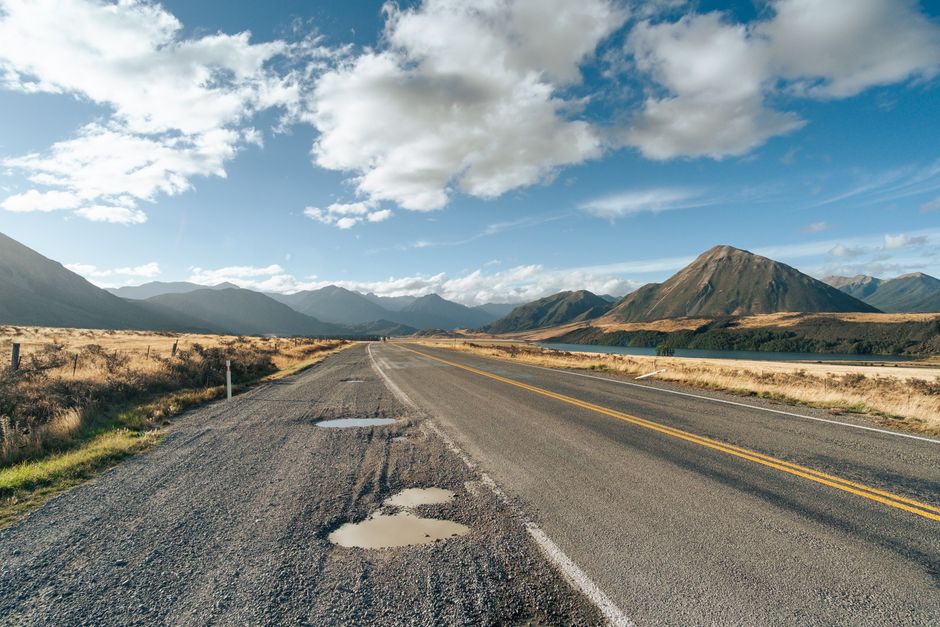
The best seven-day route follows the inland spine. It combines the Mackenzie Basin, Aoraki/Mount Cook, Queenstown, and Fiordland. You will still drive most days, but the major transfers remain understandable and the landscape changes constantly.
| Day | Overnight base | Main plan | Approximate driving |
|---|---|---|---|
| 1 | Christchurch | Arrive, recover, and collect the vehicle | 0-30 km |
| 2 | Lake Tekapo | Drive through the Canterbury Plains and Mackenzie Basin | 230 km, about 3 hours |
| 3 | Aoraki/Mount Cook or Tekapo | Walk one valley track and spend the evening near the mountains | 100-110 km return, depending on base |
| 4 | Queenstown | Travel via Omarama, Lindis Pass, and Wānaka | 260-300 km, about 4 hours |
| 5 | Queenstown | Use a full day for the lake, a walk, or a local excursion | 0-50 km |
| 6 | Te Anau | Drive to Te Anau and prepare for Milford Sound | 170 km, about 2 hours |
| 7 | Queenstown or Te Anau | Milford Sound day trip, or return toward the airport | Up to 290 km from Te Anau |
This plan works best with an early start on the Milford day. The road from Te Anau is scenic, but stops quickly multiply the schedule. If the final flight leaves Queenstown on day seven, stay in Queenstown on day six and treat Milford as optional. That is safer than pairing a long fiord trip with a tight airport connection.
Why the inland route wins
It has the strongest scenery-to-driving ratio for a short holiday. You move from dry farmland to turquoise lakes, glacial valleys, beech forest, and fiord country without crossing the entire island.
What to cut first
Cut Aoraki/Mount Cook only if the weather forecast is poor and your trip has no flexibility. Cut the West Coast, not Milford Sound, if this is your first South Island visit and the fiord is a main reason for coming.
How do you pace driving days in high summer?
High summer brings long daylight hours, but that does not make a ten-hour driving day enjoyable. Alpine roads are winding, scenic stops are frequent, and fatigue becomes a real safety problem. Use these rules.
- Cap normal driving at four hours. A four-hour route can become six hours after viewpoints, lunch, fuel, and a short walk. Treat the map time as the minimum, not the plan.
- Schedule one long transfer every three days. Put the longest drive between two quiet nights. Do not follow it with another major attraction that requires a dawn start.
- Drive the Milford Road in daylight. From Te Anau, allow a full day for the return trip. The road has waterfalls, mountain passes, tunnels, and pull-outs that deserve time. A rushed return is a poor trade for one extra Queenstown evening.
- Use two-night bases around major scenery. Two nights in Tekapo, Wānaka, Queenstown, or Te Anau lets you explore without packing every morning.
- Refuel before remote sections. Fill the tank before heading toward Aoraki/Mount Cook, Milford Sound, or the West Coast. Services are not evenly spaced, and mobile coverage can be limited.
- Leave a weather decision point. Check the forecast the night before a mountain crossing. If heavy rain or strong wind is expected, swap the order of destinations instead of forcing the original route.
The best pacing rule is the one most itineraries ignore: one major experience per day. A morning walk, an afternoon transfer, and a sunset viewpoint can work. A mountain hike, a long drive, and a booked cruise usually cannot.
Where should you spend an extra night?
Spend the extra night in Te Anau if Milford Sound matters most. It shortens the fiord day, gives you an early start, and creates a useful buffer if rain or traffic slows the return. Queenstown is more entertaining at night, but Te Anau is the better strategic base for Fiordland.
Choose Wānaka for a calmer alpine break
Wānaka suits travellers who want a slower lake town, short walks, and access to the Crown Range or Haast direction. It is a better recovery stop than adding another single night in Queenstown. Give it two nights if you have already spent several days moving between accommodation.
Choose Aoraki/Mount Cook for mountain access
Stay near Aoraki/Mount Cook when the mountains are the main attraction. Dawn and late afternoon often give better light and fewer people on popular tracks. One night can work, but two nights protect the experience from cloud. If the forecast shows poor visibility for the entire stay, use that night at Tekapo or Wānaka instead.
Choose the West Coast only with spare time
Hokitika, Punakaiki, Franz Josef, and Haast deserve more than a drive-by. Add this coast when you have at least four nights available. Do not squeeze it between Christchurch and Queenstown in a seven-day plan. The tradeoff is clear: the West Coast adds wild scenery, while the inland route gives a smoother trip with fewer long transfers.
What changes in high summer?
Are the Great Walks easy to add?
No. Milford, Routeburn, and Kepler are high-demand walks with fixed hut and transport logistics. DOC’s 2026 booking data showed the Milford Track selling out in 34 minutes, while Routeburn and Kepler also drew very high demand. Book the walk first, then build the road trip around its dates. If you book the road trip first, you may end up with a beautiful itinerary that cannot connect to the track.
For a shorter visit, choose a day walk instead of forcing a multi-day hike. It keeps the route flexible and avoids carrying a full set of overnight gear through a driving holiday. Check current track conditions and booking rules on the Department of Conservation Great Walks page.
Does summer guarantee good weather?
No. Fiordland can be wet at any time of year, and alpine cloud can hide Aoraki/Mount Cook after a clear morning. Summer improves daylight and access, not certainty. Build a backup around museums, lakefront towns, short forest walks, and flexible driving days.
Do you need to book every night?
Book the first and last nights, major summer destinations, Milford transport, and any fixed walk. Keep the middle flexible if your route allows it. Peak-season accommodation in Queenstown, Wānaka, Tekapo, and Te Anau can fill quickly, so flexibility works best when you reserve cancellable rooms or hold a second option.
Which mistakes ruin a South Island road trip?
- Trying to circle the whole island in one week. The map makes the island look compact. Mountains, winding roads, and sightseeing stops make it much larger in practice.
- Booking a flight on the same day as Milford Sound. A late return, weather delay, or road incident can turn a memorable day into an airport emergency. Sleep in Queenstown after the fiord trip or leave the next morning.
- Assuming navigation apps know the current road situation. A route can remain visible while access is restricted. Check NZTA’s live information before leaving and obey temporary signs.
- Making every night a different town. This creates packing work and removes the quiet hours that make the South Island special. Two-night stays are more valuable than extra pins on a map.
- Ignoring the direction of travel. Driving west into the afternoon sun or arriving at a viewpoint after the light has gone can make a scenic route less enjoyable. Plan major viewpoints for morning or late afternoon.
- Treating high summer as a guarantee of empty tracks. Popular walks and campsites can be busy. Start early, reserve fixed experiences, and keep lesser-known walks as backups.
The strongest route is not the one with the most locations. It is the one that still works after a rainy morning, a slow mountain road, or one missed viewpoint. For most first-time visitors, that means Christchurch, the Mackenzie Basin, Aoraki/Mount Cook, Wānaka, Queenstown, and Te Anau, with at least two nights in the places that matter most.