
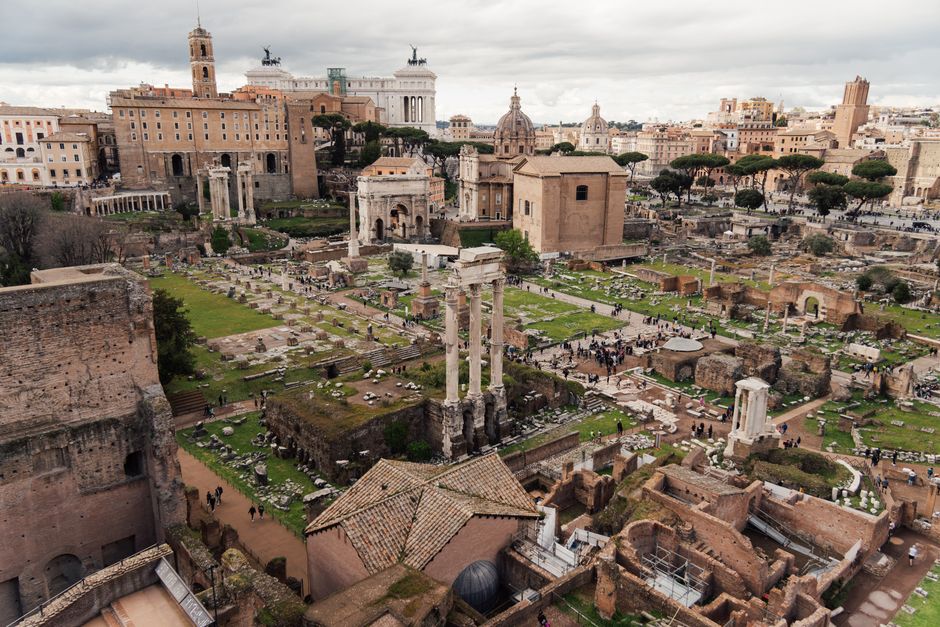
What actually makes a Rome trip work with children isn’t finding the “child-friendly version” of Rome. It’s finding activities where the history is visceral enough that adults stop thinking about aperitivo hour — and kids stop asking how much longer. Those two things overlap more than most travel guides admit.
After three trips to Rome with nieces and nephews ranging from age 5 to 14, here are the seven activities that cleared that bar. Not “the kids survived it.” The ones where everyone wanted to stay longer.
1. Gladiator School: The One Activity You Can’t Skip
Skip every other activity on this list before you skip this one. The Gladiator School run by Gruppo Storico Romano near the Circus Maximus is the most genuinely impressive thing you can do in Rome with children — and I say that as someone who has stood inside the Pantheon multiple times and still gets chills.
Kids get kitted out in a tunic, handed a wooden sword and shield, and taught actual gladiatorial fighting techniques by instructors in full Roman centurion costume. The footwork drills are historically grounded. The formations are real. By the end, they’re staging a mock battle and taking it more seriously than you’d expect.
What adults actually get out of it
The instruction covers different gladiator types — the Retiarius with a net, the Secutor with a visor helmet — and demonstrates their fighting styles in open space near the Circus Maximus, where actual crowds once watched. The history lands differently when it’s embodied rather than read off a plaque.
Booking and cost
Sessions run approximately €55 per person for the standard 2-hour experience. Book directly through the Gruppo Storico Romano website. The school runs multiple sessions daily in high season and children from age 5 up can participate fully — adults join the training alongside them. This isn’t a stand-and-watch situation.
2. The Colosseum Hypogeum and Arena Floor
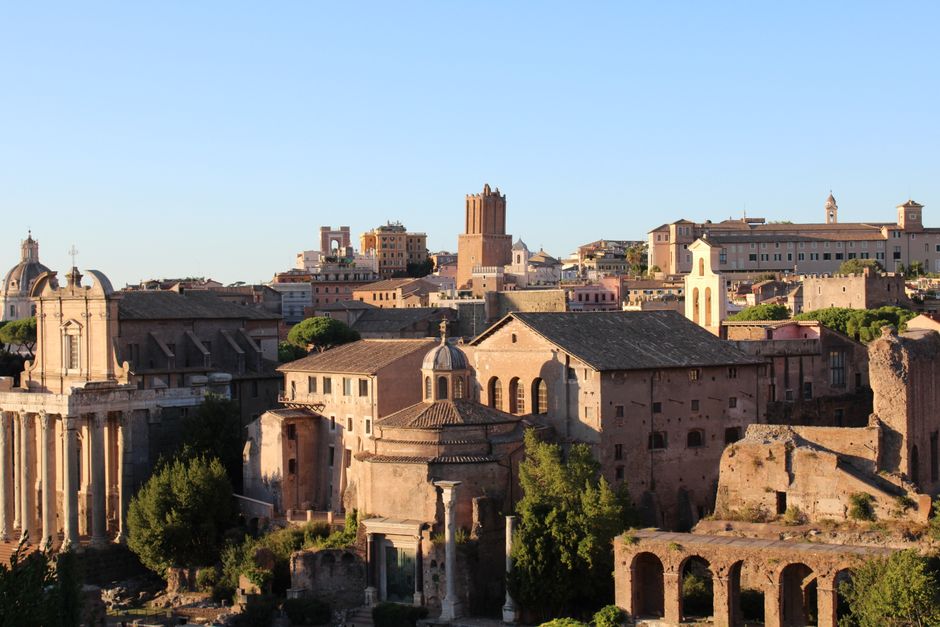
The standard Colosseum ticket (€16 adults, free for under-17s with EU residency) covers the seating tiers. Impressive. But the ticket most families miss is the one that adds the hypogeum — the underground tunnels where gladiators and wild animals waited before being raised by pulley system directly into the arena above.
Walking through the hypogeum changes the experience entirely. You see the actual ramp and lifting mechanisms. The scale of the logistics — the number of workers, the coordination required for a single day of games — becomes physical in a way it never does from the stands above.
How to book the right ticket
Book through Coopculture, the official Colosseum ticketing operator. The “Full Experience” ticket adds hypogeum and arena floor access for roughly €9 above standard entry. Book 2–3 weeks out in peak season. Same-day hypogeum tickets almost never exist — this is the most common mistake families make at the Colosseum.
What lands differently for kids vs adults
Kids fixate on the trap doors and animal cages. Adults tend to fixate on the engineering — the Colosseum was completed in 80 AD, held 50,000 spectators, and used crowd-flow architecture that modern stadium designers still reference. Both reactions are correct. The hypogeum feeds both simultaneously.
3. Ostia Antica vs the Roman Forum — Know Which to Choose
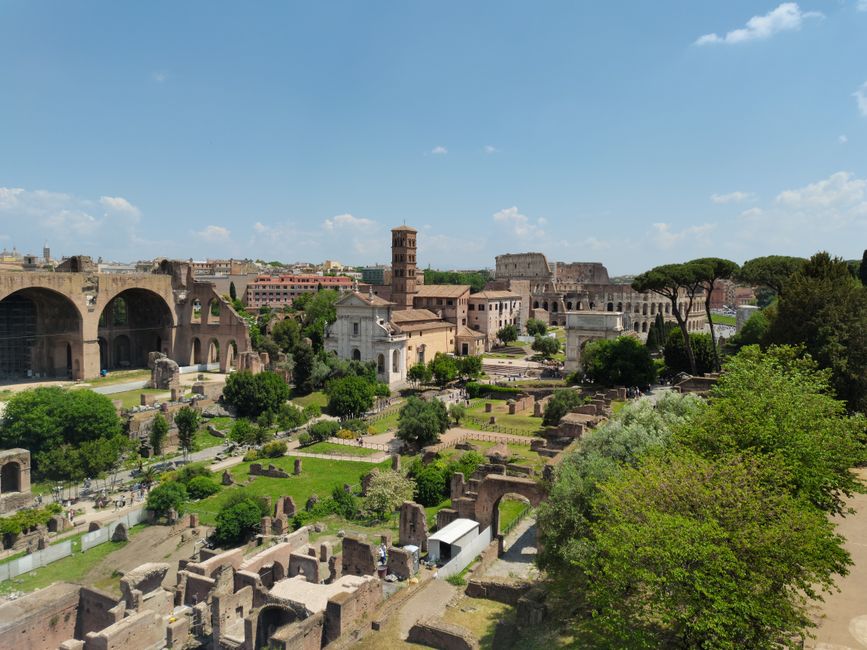
The Roman Forum is iconic. It’s also one of the harder sites to visit with children: exposed heat, narrow paths, rubble that requires significant explanation to decode, and almost nothing kids can physically enter. Ostia Antica — Rome’s ancient harbor city, reachable in 35 minutes via Metro Linea B plus the Ostia rail connection from Porta San Paolo — works differently.
| Factor | Roman Forum | Ostia Antica |
|---|---|---|
| Crowd level | Very high (peak season) | Low to moderate |
| Freedom for kids to move | Restricted — tight paths | High — open ruins with space |
| Shade and breathing room | Minimal | Trees, wide open areas |
| Adult interest level | High (historically iconic) | High (immersive, intact) |
| Entry cost (adults) | €16 combined with Colosseum | €12 |
| Walkable interiors | Very few you can enter | Many intact rooms and buildings |
On a four-day Rome trip, do both. On a two-day trip with children under 10, prioritize Ostia Antica. You can walk through apartment blocks, a functioning theatre, and a public bathhouse. It reads as a city rather than a field of collapsed stone.
4. The Catacombs: Better With Kids Than You’d Expect
Are the catacombs appropriate for children?
Yes, from around age 6 up. They’re atmospheric, not gory. No visible skeletal remains in most sections. The guided tour runs about 45 minutes and the temperature underground stays at a consistent 15°C year-round — in July, that’s a meaningful break from street-level heat.
Which catacomb works best for families?
The Catacombs of San Callisto on the Appian Way have the clearest guided narration and the most organized setup for groups. The Catacombs of San Domitilla are slightly less crowded and include a preserved underground basilica that genuinely surprises people. Either works well. Avoid the Capuchin Crypt on Via Veneto for younger children — that one involves actual arranged bones on the walls, which is a different category of experience.
What the tour actually involves
Guides lead groups of 15–20 through narrow tunnels past niches where early Christians were buried. Entry is €8–10 per adult, roughly €5 for children. The darkness and low ceilings create exactly the atmosphere you’d want. Kids who’ve encountered anything about ancient Rome or early Christianity come out with context they actually retain.
5. Borghese Gallery
Book the mandatory 2-hour timed entry (€13 plus €2 booking fee via the official Galleria Borghese reservation system). Bernini’s marble sculptures look physically impossible — a man mid-transformation into a laurel tree, fingers visibly sinking into stone flesh — and children react to them before adults can even begin the mythological context. That instinctive response is the whole point of going.
6. Piazza Navona After 6pm — Done Properly
Midday Piazza Navona is crowded and overpriced. Evening Piazza Navona is one of the most pleasant public spaces in Europe. Here is the sequence that actually works:
- Arrive after 6pm when the heat drops and the light turns golden. The piazza clears significantly compared to afternoon.
- Walk the full length before sitting down. Bernini’s Fountain of the Four Rivers has specific carved figures representing four continents — detailed enough that kids can hunt for them by name.
- Buy gelato from Tre Scalini on the piazza’s west side. Their tartufo — a dense chocolate truffle gelato — costs around €5 and is a Rome institution. Skip the roaming carts.
- Street performers concentrate here in the evenings. Budget 20–30 minutes of unstructured time. Kids find something to fixate on without being directed.
- Walk 10 minutes toward Campo de’ Fiori for dinner. Prices drop by roughly a third once you’re off the square itself.
7. Vatican Museums With Kids — What Goes Wrong and How to Fix It
Vatican Museums trips with children fail in a consistent, predictable pattern: families book standard entry, queue for 45 minutes at the gate, walk through seventeen rooms of ancient maps and papal tapestries while children disengage entirely, reach the Sistine Chapel exhausted and overcrowded, spend six minutes there before being pushed through by the flow of people, and leave unsatisfied. The adults are frustrated. The kids remember nothing useful.
The fix requires one booking decision made weeks in advance. Several operators run early-morning Vatican access tours departing at 7am before general public entry opens — pricing runs €50–80 per person through third-party operators authorized by the Vatican. Alternatively, after-hours evening access is available through the Vatican Museums official booking site for select dates. The Sistine Chapel with 40 people in it instead of 400 is a structurally different experience. The ceiling stops being a blur and becomes legible.
What to do with kids before you go
Spend ten minutes showing them the specific ceiling panels on your phone: the Creation of Adam, the Expulsion from Eden, the Great Flood. Give them three things to find once inside. Children who arrive with a specific visual target absorb the space. Children dragged through it passively remember the crowd and the sore feet.
Time and cost
Standard Vatican Museums entry is €20 per adult, free for under-6. Budget a minimum of 2.5 hours if you’re doing the museums seriously, longer if the Raphael Rooms matter to you. The single most common mistake: booking the Vatican and the Colosseum on the same day. Both deserve full attention. Combining them turns both into a checklist rather than an experience, and children signal that collapse loudly and early.
Rome with children works when you go deeper into fewer things rather than wider across more — that’s the version where the ten-year-old and the adult who wanted to be in Italy both come home satisfied.