
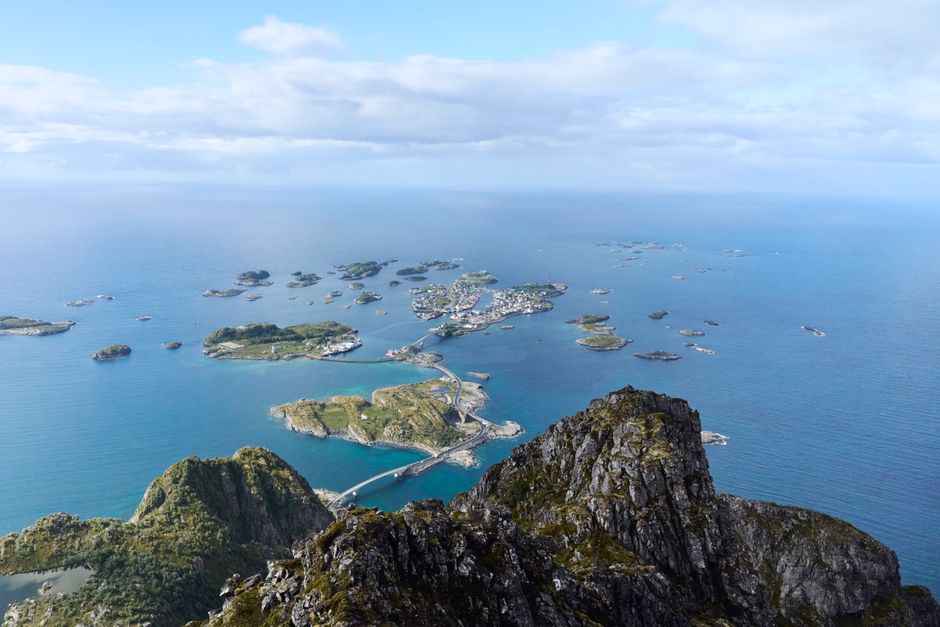
June is the strongest month for a first Lofoten trip if you want long hiking days, bright coastal scenery, and enough daylight to move between islands. The trade-off is real: weather changes quickly, popular trails fill early, and the midnight sun can ruin your sleep if you treat every bright hour as an invitation to keep moving.
How should you plan a seven-day Lofoten route?
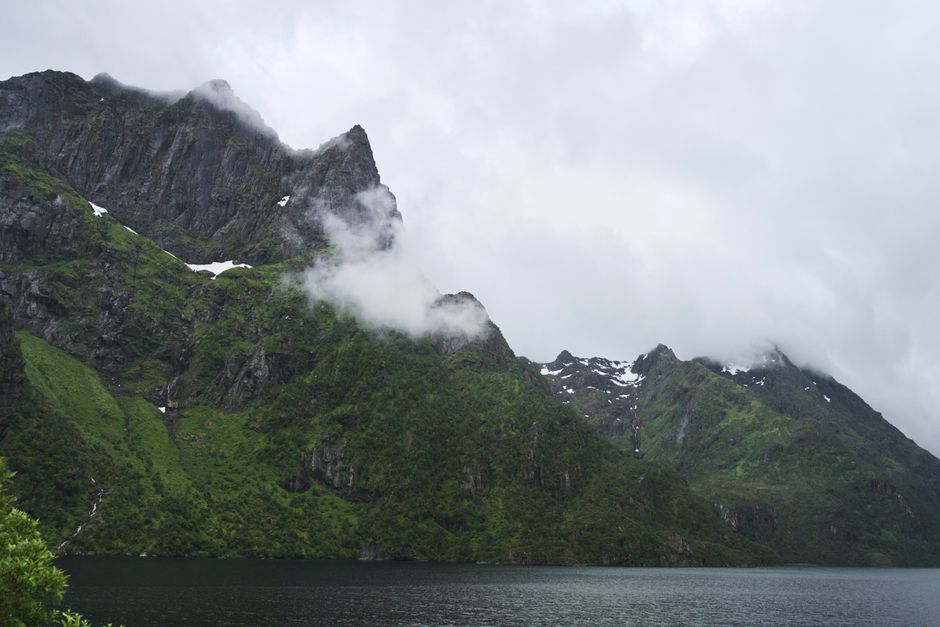
A good itinerary moves in one direction and leaves room for weather. Crossing the archipelago every day sounds efficient on a map, but ferry queues, narrow roads, photo stops, and slow buses quickly consume the afternoon.
A workable westbound sequence
- Days 1–2: Svolvær and Austvågøya. Use Svolvær as a soft landing. Walk around Kabelvåg, visit Henningsvær, and choose a moderate local trail before attempting a longer summit.
- Day 3: Gimsøya. Move toward Hov, Eggum, or Laukvik. Hoven rises 367 metres and takes about one hour each way according to local trail information, making it a strong first midnight-sun hike.
- Days 4–5: Vestvågøya and Flakstad. Base yourself around Leknes, Ramberg, or Fredvang. Use one day for Haukland and Uttakleiv, then reserve another for Kvalvika and Ryten.
- Days 6–7: Reine and Moskenesøya. Finish with Reinebringen, the villages of Hamnøy and Å, and a weather-dependent coastal walk. Keep your final night close to your departure point.
How to protect the itinerary from bad weather
Keep one flexible day instead of assigning every hour to a hike. If clouds cover the summits, switch to beaches, village walks, museums, or a scenic drive. If wind affects a ferry, you will also appreciate having a spare night built into the route. A seven-day trip should cover two or three bases, not six.
When to reserve accommodation and transport
Reserve June accommodation early in Reine, Hamnøy, Henningsvær, and the most popular beach areas. For a car, book before arrival and check its length before pricing a ferry. Without a car, download the Reis Nordland journey planner and verify every connection on the date of travel. Timetables can change, and a route that works in the afternoon may not run after a late hike.
Which Lofoten hikes work best under the midnight sun?
The best hike is not always the highest summit. In June, choose routes that match the night’s cloud cover, your transport, and your energy for the following morning.
| Hike | Published height or distance | Best use | Main warning |
|---|---|---|---|
| Hoven | 367 m; about 2 km one way | Easy first midnight-sun hike | Wet ground around the marsh after rain |
| Kvalvika and Ryten | Ryten reaches 543 m; about 3 hours for a common route | Beach and summit in one outing | Steep edges and crowded parking |
| Reinebringen | 484 m; about 1,974 steps in the published guide | Short, dramatic view over Reine | Very steep stairs and possible closures |
| Himmeltinden | About 931 m to the accessible summit area | Long challenge for strong hikers | Rougher terrain, wind, and a five-hour outing |
The clear winner for most visitors
Choose Hoven if you want a low-risk introduction to midnight-sun hiking. Choose Kvalvika and Ryten if you want the classic beach-and-mountain image and have a full half-day. Reinebringen gives the biggest view for the shortest time, but the steps punish knees and crowds can make the narrow route unpleasant.
When to skip a famous trail
Do not force Reinebringen during strong wind or rain. Skip exposed ridges when cloud removes the view and wet rock increases the fall risk. Trail popularity does not make a route easy. Check the local hiking information shortly before departure, stay on established paths, and turn around when the surface or visibility stops matching your experience.
How can you island-hop without wasting a day?
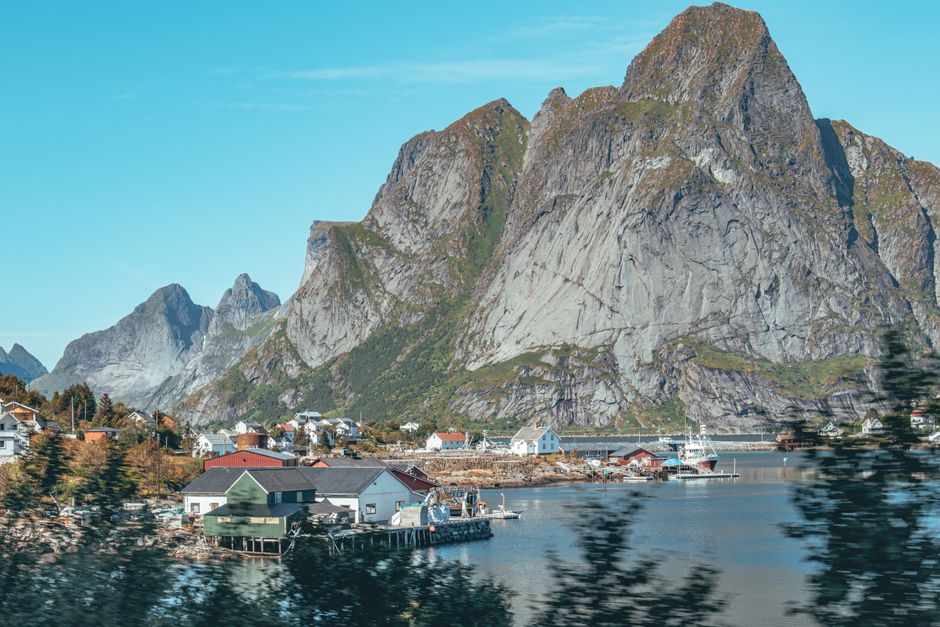
Island-hopping in Lofoten works best when you treat ferries and buses as fixed constraints, then fit hikes around them. The direct Bodø–Værøy–Røst–Moskenes ferry is useful for arriving or leaving, but it is not a casual sightseeing shuttle. In June, check the exact sailing date, vehicle capacity, and weather notices before committing to a same-day connection.
Should you take the car ferry or travel on foot?
For a couple or small group carrying camping equipment, a car gives the most freedom around trailheads and beaches. The Torghatten route page currently lists a 65 NOK adult foot-passenger reservation and a 605 NOK conventional vehicle fare for cars up to six metres; prices and booking rules can change, so verify the sailing before payment. Torghatten says reserved travelers should arrive 45 minutes before departure, and direct Bodø–Moskenes services are the safer choice for that crossing when available.
Can you manage Lofoten without a car?
Yes, but the route needs more patience. Reis Nordland bus lines connect places such as Svolvær, Leknes, and Å, while local routes reach selected villages and trail areas. The network suits travelers who base themselves in towns and choose walks near bus stops. It works poorly for a packed list of remote beaches with late-night returns.
Is a guided midnight-sun trip worth paying for?
It is worth the cost when you lack a car or do not want to navigate a rough trail after midnight. Pukka Travels lists a Gimsøya midnight tour at 1,390 NOK, with an evening departure, transport from Svolvær, and several options at Hov. That is a service purchase, not a guarantee of clear skies. If the forecast is poor, use the same money on an extra accommodation night and choose your own weather window.
What goes wrong on a June Lofoten trip?
The most common mistake is planning around photographs instead of conditions. A blue-sky image hides loose rock, slippery boardwalks, cold wind, limited parking, and the time needed to get from one island to the next. Lofoten rewards a slower plan because every short drive can include a viewpoint, a single-lane section, or a ferry queue.
Mistake one: confusing daylight with usable energy
The midnight sun creates a false sense that the day has no end. Hikers start at 22:00, finish at 02:00, then try to catch an early bus. After two nights, the trip becomes a tired march. Use blackout curtains or a sleep mask, set a hard turnaround time, and protect at least one normal night of sleep every few days.
Mistake two: bringing summer clothes for a summer latitude
Bring a waterproof shell, warm mid-layer, spare socks, gloves, and shoes with firm grip. A dry forecast does not remove wind from an exposed summit. Carry water and food even on short routes because shops and cafés close long before the landscape does. Phone reception can be uneven in valleys, so save maps offline and tell someone your route when hiking alone.
Mistake three: treating the most famous trail as the best trail
Reinebringen may be the right choice for a strong-weather morning, but it is a poor choice for every visitor. Crowds, steep steps, and maintenance work can change the experience. Hoven, Eggum, Uttakleiv, and quieter coastal paths can deliver better light with less pressure. Leave no waste, stay on marked paths, and park only where signs allow. Local communities carry the cost of careless travel, and the landscape cannot absorb unlimited shortcuts.
Should you plan Lofoten independently or use a tour?
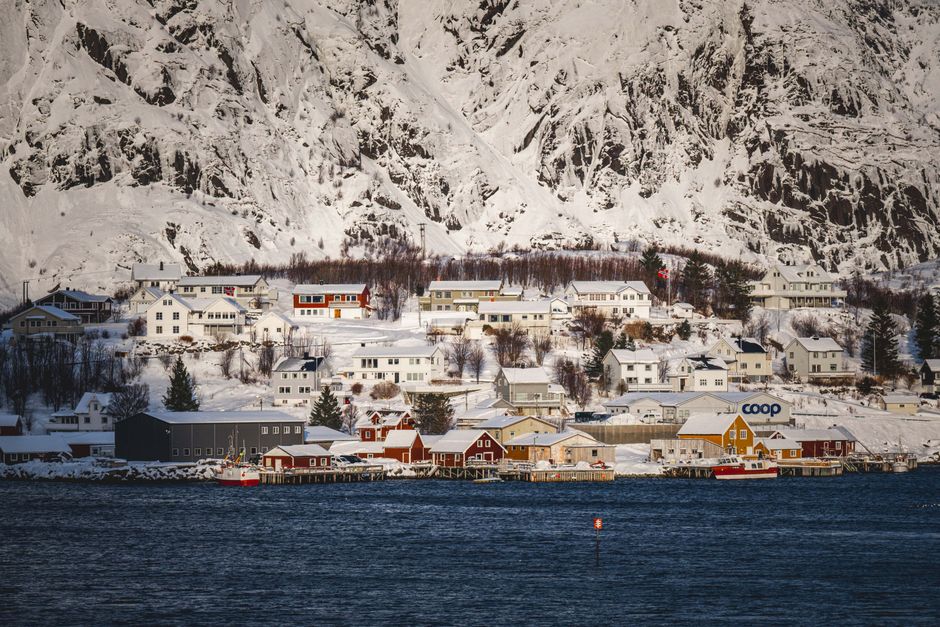
Plan independently if you can accept a slower itinerary and check transport every day. Independent travel gives you the best chance of following clear weather from one island to another, but it requires early accommodation bookings, offline maps, and a willingness to drop a hike.
Choose independent travel when
You want several sunrise or midnight-sun options, prefer quiet beaches, or plan to combine moderate walks with villages and photography. A rental car helps most when your group has limited time, though it adds ferry costs, parking pressure, and responsibility on narrow roads. Without a car, build the trip around Svolvær, Leknes, Ramberg, and Reine rather than promising yourself every remote trail.
Choose a guided outing when
Use a local guide for a demanding hike, uncertain navigation, or a late excursion when you do not want to drive tired. The guide cannot control cloud, wind, ferry cancellations, or trail closures, but local knowledge can save a poor-weather evening. The strongest June plan leaves space for both choices: a self-guided coastal walk on a clear afternoon and one paid outing only if its route and timing solve a real problem.
Lofoten’s future as a hiking destination will depend on visitors learning to value timing, restraint, and good route choices as much as dramatic summits. In June, the midnight sun gives you the rare luxury of waiting for the right conditions—and that patience usually produces the better trip.