
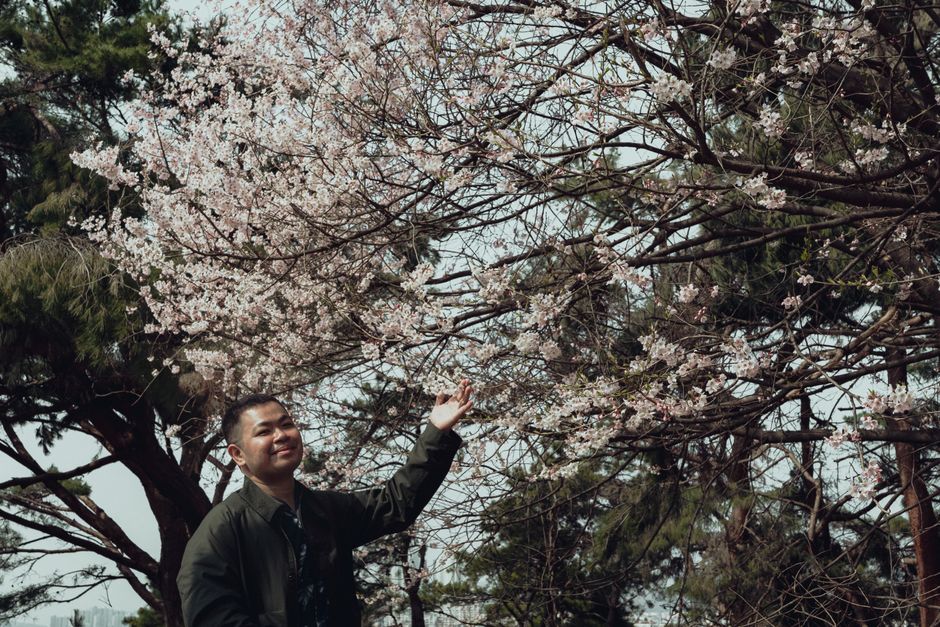
The common mistake is treating April as one fixed cherry-blossom season across South Korea. It is not. Gyeongju usually opens first, while Seoul often peaks several days later, so a short trip can miss the flowers if you plan by calendar alone. In 2026, the forecast puts Gyeongju bloom around March 28 and Seoul bloom around April 3, with Seoul reaching its best display near April 10. Weather can move those dates, but the pattern is reliable enough to shape a smart route.
When do cherry blossoms peak in Seoul and Gyeongju?
For most travelers, the best April window is the first 10 days of the month. Gyeongju is the earlier bet because the southern city warms sooner. Seoul works better from the first full week of April onward. The flowers last only a short time at their best, and wind or rain can strip petals quickly, so build in one flexible morning instead of tying every blossom walk to one exact date.
2026 blossom timing by city
| Place | Forecast bloom | Likely best viewing | Best-known setting |
|---|---|---|---|
| Gyeongju | Around March 28 | April 1–6 | Bomun Lake, Daereungwon, Woljeonggyo Bridge |
| Seoul | Around April 3 | April 7–14 | Yeouido, Seokchon Lake, Seoul Forest |
| Incheon | Around April 7 | April 11–17 | Incheon Grand Park |
How much can the dates shift?
Forecasts are useful for booking flights, not for promising a perfect photograph. A warm spell can push blossoms forward, while cold rain can delay opening or shorten the peak. Check the Korea Tourism Organization forecast and local weather again five to seven days before each city stay. If Seoul is still bare, move your first blossom morning to Gyeongju or visit lower, warmer river paths before palace gardens.
My planning rule is simple: place Gyeongju before Seoul when visiting both. That order follows the usual bloom progression and gives you a second chance if Seoul is late.
Seoul or Gyeongju: which spring stop wins?
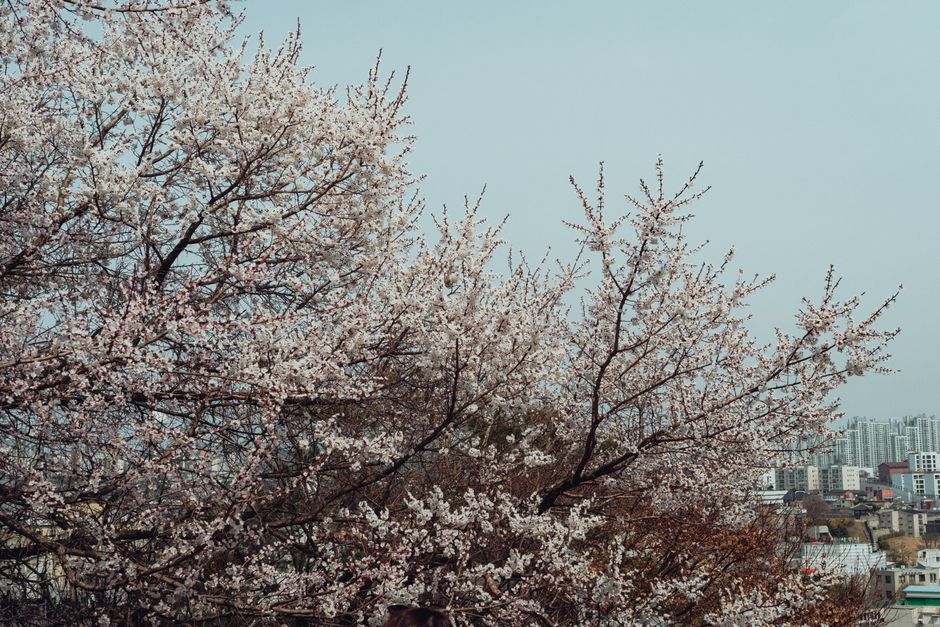
My pick for cherry blossoms is Gyeongju. Seoul has more famous city views, but Gyeongju gives the flowers a stronger setting: royal tombs, old stone walls, quiet lanes, and a lake loop that feels designed for walking. Choose Seoul for variety. Choose Gyeongju for atmosphere.
Choose Seoul for city energy
Seoul suits a first visit that must combine blossoms with palaces, shopping, cafés, museums, and nightlife. Yeouido gives you a long riverside walk, while Seokchon Lake pairs pink trees with the Lotte World skyline. Seoul is also easier for travelers who dislike changing hotels. You can stay in one neighborhood and reach several spring sites by subway, although popular roads become crowded from late morning.
Choose Gyeongju for a slower two-day stay
Gyeongju rewards an early start and comfortable shoes. The historic center links Daereungwon, Cheomseongdae, Gyochon Hanok Village, Woljeonggyo Bridge, and Hwangnidan-gil within a manageable sightseeing area. Bomun Lake sits farther out, but its loop gives you open space and long blossom views. Stay near Hwangnidan-gil if you want evening food and easy walking, or near Bomun Lake if you prefer resort hotels and less street noise.
- Best for a first-time Korea trip: Seoul.
- Best for historic scenery: Gyeongju.
- Best for photographers: Gyeongju at sunrise and Seoul at blue hour.
- Best for families with limited walking: Seoul, because transport and indoor breaks are easier.
- Best for a four-day trip: Seoul only, unless the forecast strongly favors Gyeongju.
How to build a five-day April itinerary
The strongest route gives each city enough time to breathe. A rushed day trip from Seoul to Gyeongju is possible, but it turns a beautiful historic city into a checklist. I would spend three nights in Seoul and two nights in Gyeongju, with the train between them in the middle of the trip.
Days 1–3: Seoul without chasing every tree
- Day 1: Stay close to your hotel after arrival. Walk a compact neighborhood such as Myeongdong, Insadong, or Ikseon-dong, then save your energy for the next morning.
- Day 2: Start at Yeouido before 9 a.m. Walk the blossom road and Hangang Park, then leave the crowded river route for a palace visit or Bukchon in the afternoon.
- Day 3: Check Seokchon Lake or Seoul Forest according to the latest bloom report. Pair one outdoor site with one indoor stop, such as the National Museum of Korea or a café district.
Days 4–5: Gyeongju at walking pace
- Day 4: Take the morning KTX to Singyeongju, leave bags at your accommodation, and walk Daereungwon, Cheomseongdae, Gyochon, and Woljeonggyo Bridge. Finish near Hwangnidan-gil.
- Day 5: Visit Bomun Lake early. If the weather is clear, add Bulguksa; if rain threatens, spend more time in the historic center and use the afternoon for cafés and museums.
Do not schedule three far-apart blossom sites on the same day. Travel time, queues, toilets, meals, and photo stops take longer than map estimates suggest. One excellent morning beats four rushed locations.
What should you book and pack for blossom season?
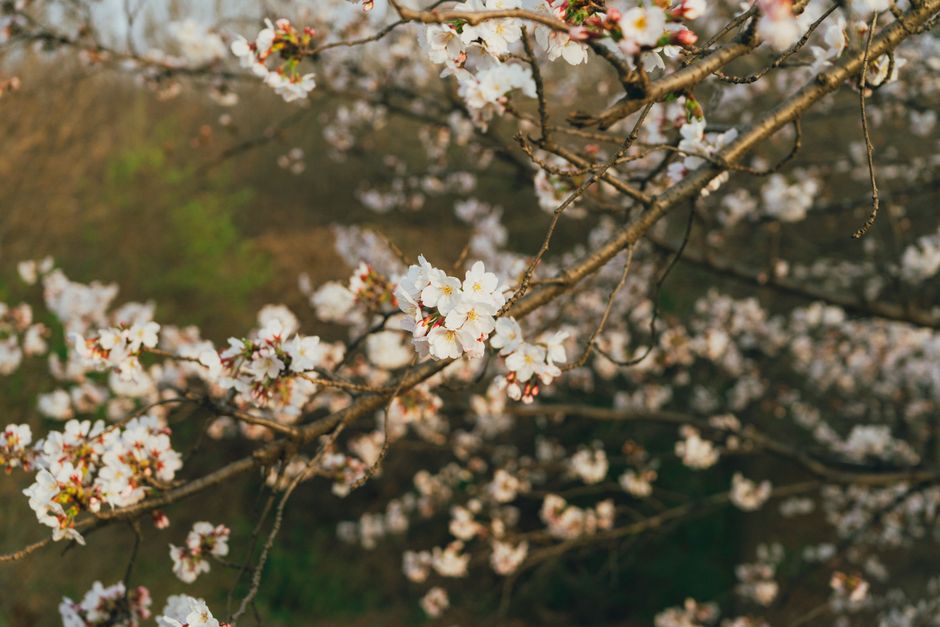
Book transport first, then choose hotels near your walking route. Cherry-blossom weekends fill faster than ordinary April dates, especially when Seoul’s peak overlaps with the Yeouido spring festival. You do not need expensive gear, but three practical travel products solve real problems: city transit, mobile data, and the Seoul–Gyeongju transfer.
Use a KORAIL KTX ticket for the intercity move
The KORAIL KTX from Seoul to Singyeongju takes roughly two hours and ten minutes on a direct service. Reserve a standard-class seat once your date is firm, and avoid planning the transfer after a long international arrival. Singyeongju Station is outside the historic center, so allow around 30–45 minutes for a local bus or taxi to reach central Gyeongju. For a Seoul–Gyeongju return trip only, do not buy a KORAIL Pass automatically. A normal point-to-point ticket is usually the simpler choice; a pass makes more sense when you add several long train journeys.
Buy a T-money Card for local buses and subways
A standard T-money Card starts at about ₩2,500 before loading travel credit. It works on Seoul subways, city buses, taxis, and public transport in Gyeongju. Tap when boarding and getting off. Load a small amount first rather than leaving a large balance, since refunds can be inconvenient. T-money is the best basic choice for this itinerary because it removes the need to buy a separate ticket for every short ride.
Choose a data plan that keeps maps working
That is enough for maps, translation, train checks, and messaging on a five-day trip if you use hotel Wi-Fi for large downloads. Install it before departure, but keep your primary SIM available for verification texts if your bank requires them. You do not need a pocket Wi-Fi device unless several people will share heavy data use; an eSIM is lighter and avoids returning hardware.
Pack layers rather than a thick coat. April mornings can feel cold beside the river, while sunny afternoons become comfortable. Add walking shoes with grip, a compact rain shell, lip balm, and a small folding umbrella. The umbrella matters more than a fancy camera on a blossom trip.
Which mistakes ruin an April blossom trip?
Should you book the exact peak dates months ahead?
Book cancellable accommodation early, but do not assume a forecast can guarantee a peak day. The practical move is to reserve two or three nights in each city and keep the outdoor schedule flexible. If your dates are fixed, choose places with more than one blossom setting nearby. That protects the trip from one storm or a late bloom.
Is a day trip from Seoul enough for Gyeongju?
It is enough to see the headline sites, not enough to enjoy Gyeongju properly. The first and last train segments consume much of the day, and Bomun Lake becomes difficult to add without a taxi. Stay overnight if the historic atmosphere is part of the reason you are going. Skip Gyeongju entirely if you have fewer than four nights in Korea and Seoul is your first visit; a rushed second city is a poor trade.
What should you avoid at the blossom sites?
- Do not arrive at noon expecting quiet paths or easy portraits.
- Do not walk on planted beds or block narrow bridges for photos.
- Do not rely on one weather app or one bloom forecast.
- Do not carry a large suitcase through Gyeongju’s old center; use luggage storage or send bags ahead.
The compressed verdict is clear: Seoul gives you the best all-round first trip, while Gyeongju gives you the better cherry-blossom experience. Put Gyeongju first, Seoul second, and leave one morning flexible.
| Travel goal | Best choice | Reason |
|---|---|---|
| Maximum city variety | Seoul | Palaces, markets, museums, cafés, and several blossom parks |
| Most memorable blossom scenery | Gyeongju | Flowers framed by tombs, bridges, lakes, and historic streets |
| Best five-day route | 3 nights Seoul + 2 nights Gyeongju | Balances transport time with two different spring landscapes |