
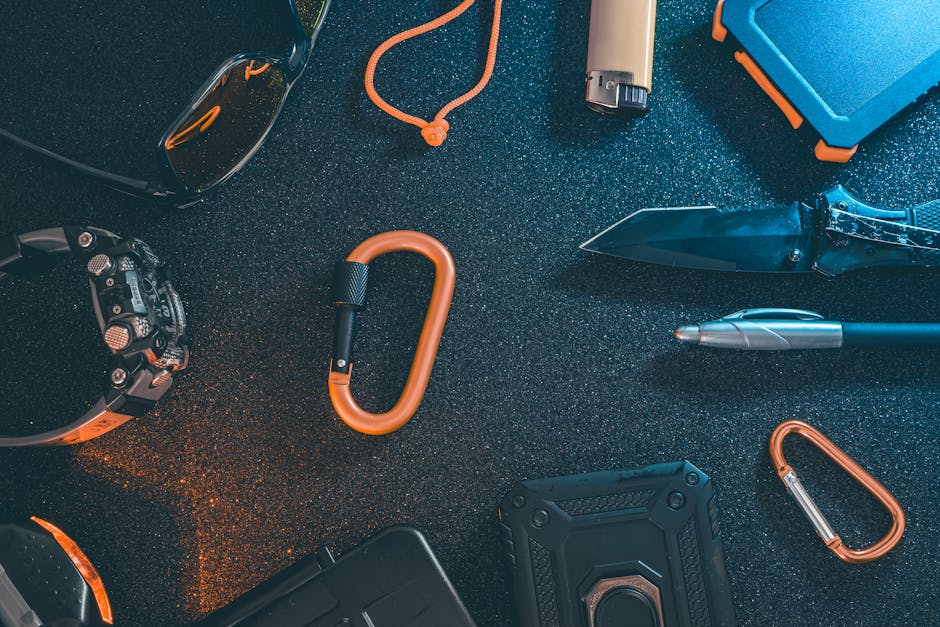
Here is the pattern that repeats itself: a man packs carefully before a trip, includes a bunch of accessories he saw recommended online, and arrives at his destination realizing he used his phone to do most of what those accessories were supposed to handle. The pillow is under the seat. The adapter is still in the bag. The packing cubes are flattened because he ran out of space and stuffed everything loose around them.
The problem is not that travel accessories do not work. It is that most buying decisions start with product categories instead of actual problems. This guide works the other way around — start with the problems, then buy the tools that solve them.
Build Your Kit Around Three Functions Before Buying Anything
Name the three places your last trip fell apart. For most men, the answers cluster in the same areas: sleep quality on overnight transport, staying powered in cities with scarce outlets, and managing documents under pressure at check-ins. Everything else is marginal.
This framework cuts out around 60% of marketed travel accessories immediately. A portable UV sanitizer wand does not solve any of those three. Neither does a travel lint roller or a miniature humidifier. If an accessory does not clearly address sleep, power, or logistics, it is optional at best and dead weight in practice.
Getting Sleep Right on Long Flights and Overnight Trains
The U-shaped neck pillow is one of the most widely owned and least effective travel items sold. It holds your head in a forward-tilted position, which is mechanically the opposite of what you want on a long flight. After a few hours, your neck aches in a way it would not have if you had just leaned against the window with a bundled jacket.
The Trtl Pillow ($60) solved this problem with a rigid internal spine that supports the side of your neck instead of cupping the front. It wraps around like a scarf and looks odd, but the mechanics are correct. On overnight flights over six hours, the difference in how you arrive is noticeable enough to justify the cost. If you genuinely never sleep on planes regardless of support, skip it entirely and pack the Manta Sleep Mask ($35), which blocks 100% of light without pressing on your eyes.
Document Control at Check-Ins
Check-in counters are where document chaos happens. You are juggling a passport, a boarding pass, a payment card, and a loyalty card while the line builds behind you. The Bellroy Travel Wallet ($95) organizes all of it in a flat leather case — passport, up to six cards, folded documents, and even a SIM card slot. It is expensive for a wallet. It earns that price by making you faster and less frantic at every checkpoint.
The Travelon Anti-Theft Blocking Wallet ($30) does 90% of the same job at a third of the cost. It lacks the premium leather and the clean aesthetics, but the organizational system is nearly identical. Either option beats a regular bifold wallet stuffed with cards and a passport rubber-banded to the outside.
Accessories Worth Their Weight: A Direct Comparison

The table below filters accessories on three criteria: they solve a real, recurring problem; their weight-to-value ratio is positive; and their failure mode is low — meaning if they stop working mid-trip, the consequences are manageable. Every item listed has a specific, singular job.
| Category | Budget Pick | Best Pick | Price Range | Skip If |
|---|---|---|---|---|
| Neck Pillow | Trtl Pillow Soft | Cabeau Evolution Classic | $50–$80 | You never sleep on transit |
| Power Bank | Anker PowerCore 10000 ($22) | Anker 737 25,600mAh ($110) | $22–$110 | Never — always bring one |
| Travel Adapter | EPICKA Universal ($26) | Anker 727 Charging Station ($35) | $26–$35 | Staying in one country with matching outlets |
| Packing Cubes | Amazon Basics 4-set ($20) | Eagle Creek Pack-It Specter ($45) | $20–$45 | Packing a single outfit per trip |
| Luggage Lock | Master Lock 4688D TSA ($13) | Pacsafe Retractasafe 250 ($30) | $13–$30 | Carry-on only travel |
| Bag Tracker | Tile Mate ($25) | Apple AirTag ($29) | $25–$29 | You never check luggage |
| Headphones | Soundcore Q45 ($80) | Sony WH-1000XM5 ($350) | $80–$350 | Flights consistently under 2 hours |
The Apple AirTag at $29 is the clearest value on the list. Stick one in your checked bag and you always know whether it made the carousel — or whether it is still sitting in a Dubai transit hub while you are in Auckland. The Tile Mate works too, but Apple’s Find My network is denser in most major international airports, which matters when your bag actually goes missing.
On headphones: the Sony WH-1000XM5 at $350 is the best noise-canceling headphone available for flying. If you take more than six long-haul flights per year, it earns back its cost in reduced exhaustion alone. For occasional travelers, the Soundcore Q45 at $80 delivers about 80% of the performance at 23% of the price. That math is worth taking seriously.
Power and Connectivity: The One Category You Cannot Improvise
Most travel problems have a workaround. Forgot packing cubes? Fold tighter. No adapter? Buy one at the airport for $20 markup. Dead phone with no power bank, no portable battery, and no outlet nearby? There is no workaround. You navigate by memory, miss booking confirmations, and hotel check-in becomes a negotiation involving a name spelled aloud three times.
The power stack deserves more deliberate planning than it gets.
Choosing the Right Power Bank Capacity
The Anker PowerCore 10000 ($22) is the correct starting point for most travelers. 10,000mAh charges a modern iPhone 15 approximately 2.5 times from zero. It weighs 180g, fits in a jeans pocket, and costs less than a decent airport sandwich. This is not a compromise choice — it genuinely covers most urban travel use cases without adding meaningful weight to a carry-on.
The Anker 737 Power Bank at 25,600mAh ($110) is the right upgrade for specific situations: you are carrying a MacBook Air or Pro that charges via USB-C, or you are shooting video with a mirrorless camera and need to cycle batteries on the move. It weighs 595g and cannot go in checked baggage under aviation rules, so you are always carrying it in your personal item. Calculate your actual charging load before buying up in capacity — the extra weight and cost only make sense for heavy users.
Travel Adapter vs. Travel Charger — Not the Same Thing
This distinction causes real, preventable damage. A travel adapter only changes the plug shape — it does nothing about voltage. In the UK, most of Europe, Australia, and Japan, wall voltage runs at 220-240V. North America runs 110-120V. Most modern electronics — phones, laptops, cameras — include auto-switching power supplies that handle both ranges automatically. For those devices, a plug adapter is sufficient.
Plug a 120V hair dryer or electric shaver rated for North American voltage into a 220V outlet via just a plug adapter and you will destroy it within seconds. Always check the voltage label printed on any appliance before assuming a plug adapter covers it.
The smarter system: use the Anker 727 Charging Station ($35) — a multi-port USB hub that handles 100-240V natively with 2 USB-A and 2 USB-C ports. Add a single EPICKA Universal Travel Adapter ($26, covers 150+ countries) for the wall connection. One adapter for the whole hub, one hub for all your devices. This setup weighs less and takes up less space than carrying three individual plug adapters.
eSIMs for International Data Without the Airport Hunt
Airalo sells regional and country-specific mobile data plans directly through their app, with no physical SIM card required. A 1GB Japan plan costs around $4.50. A 3GB regional Asia plan runs roughly $17. You purchase and download the plan before you fly, activate on arrival, and skip the airport SIM vendor entirely — including the 45-minute queue and the upsell pressure.
The trade-off is real: eSIM requires a compatible, unlocked phone (most flagship devices from 2026 onward support dual eSIM), and depending on your home carrier, your local number may not receive calls while the travel eSIM is active. For travelers who primarily communicate via WhatsApp, iMessage, or Signal, that trade-off is almost always worth it. For anyone who needs their home number accessible, the airport SIM route remains the backup.
What Most Men Buy and Consistently Never Use
The failure mode here is not buying low-quality gear. It is buying accessories that solve theoretical problems — things that felt smart in the product listing but never matched an actual moment in the trip.
- RFID-blocking wallets: Contactless card skimming from street-level opportunists is nearly theoretical in 2026. The attack requires specialized hardware and extremely close proximity to a contactless card in active use. Real pickpockets in tourist-heavy cities in Europe and Asia are not running RFID rigs — they are physically lifting wallets and phones. Spending $40 on RFID-blocking technology solves a threat that does not meaningfully exist in practice for most travelers.
- Heavy compression packing cubes: Standard compression cube variants can weigh 120-150g each. Eagle Creek’s Specter cubes weigh 28g each. If the compression cubes outweigh the clothing volume they save, you have broken even on weight — and paid more. Test both weights before assuming “compression” justifies the premium.
- Portable travel humidifiers: They work in theory. In practice, they need a flat surface, a water source, and they must be emptied and dried between uses to prevent mold. On a three-night itinerary through multiple hotels, almost no one actually runs through the setup routine. The dry-air problem on long flights is better addressed by drinking water before and during the flight.
- Multi-tool keychains: Most versions do not clear TSA even when packed in checked bags, and the tools they include — a 1cm blade, a nail file, a tiny flathead — have nearly zero practical application. The Leatherman Squirt PS4 ($35) is the meaningful exception: its pliers and file are functional at that size, and it clears security more often than full-size tools. Everything else in the keychain multi-tool category is effectively novelty gear.
- Dedicated travel towels for city trips: Hotels provide towels. Guesthouses provide towels. Hostels provide them when asked, or charge a small rental fee. Quick-dry travel towels earn genuine pack space on surf trips, camping itineraries, and remote trekking routes. Not hotel-to-hotel city travel, where they add weight and take up prime packing cube real estate for no reason.
Weekend Trip vs. Long-Haul: The Short Answer
For a three-day trip, four items cover almost every problem you will actually encounter: an Anker PowerCore 10000, a set of Eagle Creek Pack-It Specter cubes, a Master Lock 4688D TSA padlock for your checked bag, and an Apple AirTag inside that bag. That is the complete kit for weekend travel. Everything else is situational.
Long-haul changes the math. Add noise-canceling headphones — the Soundcore Q45 if you fly occasionally, the Sony WH-1000XM5 if flying is a regular part of your life — and a neck support for overnight segments. If your itinerary crosses more than two different outlet standards, the Anker 727 hub plus one EPICKA universal plug beats carrying multiple individual adapters and running out of sockets at the hotel desk.
Questions Men Ask Before Buying Travel Gear
Do packing cubes actually save space, or do they just organize it?
Mostly organize. Standard packing cubes do not compress clothing — they separate it into retrievable categories. The space-saving benefit comes from being able to pack more deliberately without losing track of what is where. You unpack in three minutes, find anything without digging, and repack at checkout without the chaos of a loose pile. The Eagle Creek Pack-It Specter four-piece set ($45) is the right starting point. Each cube weighs under 30g and survives years of rough handling better than resealable bags, which split at the zipper.
Is the Sony WH-1000XM5 worth $350 when AirPods Pro already exist?
On short flights, no. On long-haul overnight flights, yes — meaningfully so. The AirPods Pro 2 has excellent noise cancellation for in-ear headphones. But over-ear cups physically block ambient sound through passive isolation in addition to active noise cancellation, and they are significantly more comfortable after the four-hour mark. On a 13-hour flight to Southeast Asia or a transatlantic red-eye, the Sony WH-1000XM5 and the Bose QuietComfort 45 ($279) produce a measurably quieter and less fatiguing experience. The Bose fits slightly better on wider head shapes; the Sony has marginally stronger ANC in engine-noise frequencies. Both are correct choices. For flights consistently under four hours, AirPods Pro 2 is sufficient.
What is the one thing men most consistently forget to pack?
A power bank. Almost every time. The second most common gap is a TSA-approved lock for checked luggage. The Master Lock 4688D TSA Lock costs $13. The Anker PowerCore 10000 costs $22. Together, those two items cost less than most airport meals and prevent the two most common friction points in any trip — a dead device and an unsecured bag. If you only take two things from this entire list, take those.