
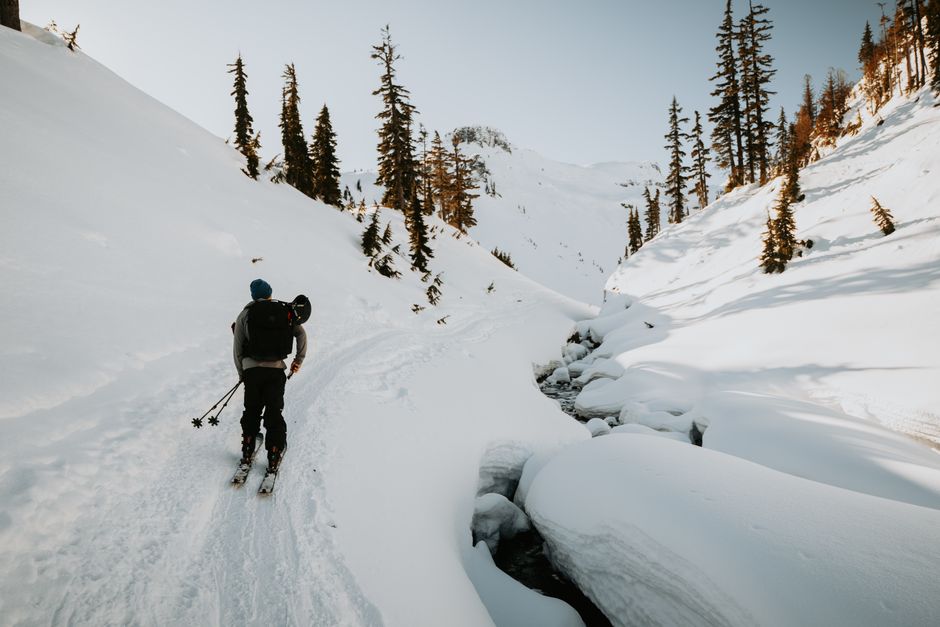
You have one free February morning in Cortina. The peaks are white, the forest is quiet, and a gentle snowshoe route sounds easier than skiing. Then the rental shop asks about your weight, the avalanche bulletin, and your planned return time. That is the moment to slow down.
Snowshoeing in the Dolomites is beginner-friendly when you choose a low-angle route, check the mountain conditions, and start with the right pace. It becomes a different activity when you leave marked winter paths and enter open slopes. This guide gives you a practical first-day plan, with route data, safety checks, and gear choices that make sense for one February trip.
Is February a good month for beginner snowshoeing?
Yes, February is an excellent month for a first snowshoe outing, but only on a simple route with stable weather. Snow cover is usually more reliable than in early winter, daylight lasts long enough for a short tour, and the Dolomite valleys offer groomed winter paths alongside more serious alpine terrain. The mistake is treating every white trail as equally safe.
What February gives you
Expect cold mornings, firm snow in shaded forests, and softer snow after lunch when the sun reaches open meadows. Fresh snowfall can make a route beautiful and tiring at the same time. It can hide trail markers, cover drainage channels, and change a familiar summer path into a navigation problem. Plan a two-to-four-hour outing, not an ambitious summit day.
For a first trip, choose a route below 2,000 metres with less than 400 metres of ascent. A broad forest track or marked winter hiking trail gives you room to learn the movement. Snowshoes feel awkward for the first 15 minutes. Keep your feet slightly wider than normal, lift the toes, and shorten your stride on climbs.
The beginner verdict
Book a guided outing if nobody in your group has used snowshoes before. A local guide can match the route to the current snowpack, show you how to descend, and change the plan when visibility drops. The extra cost buys judgment, not just company. The official Dolomites guidance also recommends checking weather and avalanche information and cancelling when conditions do not fit the route.
For a first February adventure, a short guided walk near Cortina or Seiser Alm is the strongest choice. Save steep, open terrain for a later trip after you have learned how snow behaves.
Which Dolomites snowshoe route suits a beginner?
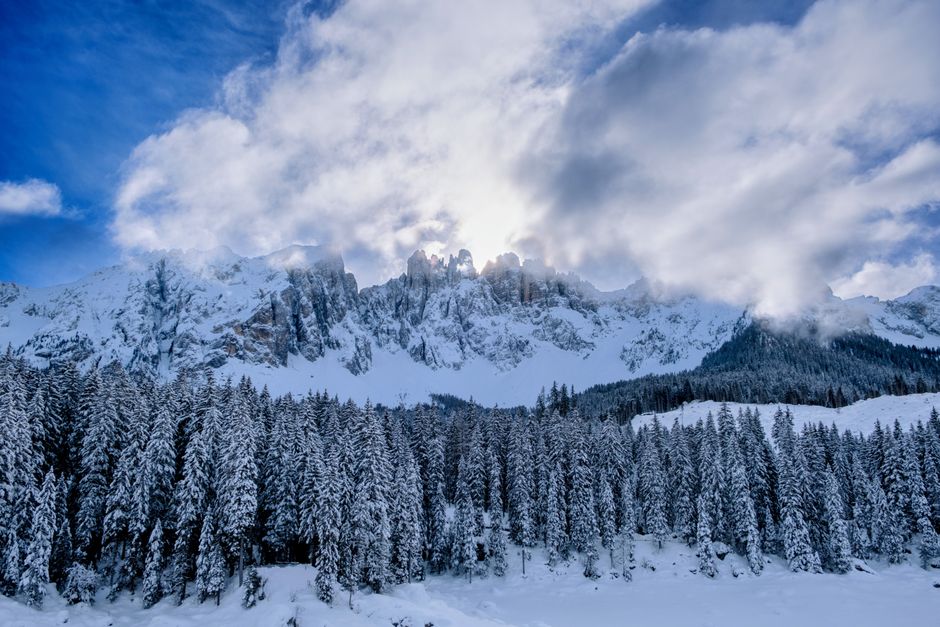
The best first route is not the one with the highest viewpoint. It is the route that lets you finish before fatigue, poor visibility, or afternoon weather becomes the main story. Start with a recognised winter route, confirm opening conditions locally, and avoid crossing ski pistes on foot unless local rules clearly allow it.
| Route | Published distance and time | Why it works | Verdict |
|---|---|---|---|
| Malga Ra Stua, Cortina | 6.3 km, 3 hours, 332 m ascent | Easy route through the Ampezzo Dolomites Natural Park | Best first choice for a reasonably fit beginner |
| Rifugio Dibona, Cortina | 6.4 km, 4 hours, 360 m ascent | Easy rating with a longer time commitment and Tofana views | Choose after one short practice walk |
| Seiser Alm winter trails | 50 km network of snowshoe routes | Many options, open landscapes, and some avalanche-secure paths | Best for flexible planning and easy route changes |
Why Malga Ra Stua wins for a first day
The three-hour itinerary leaves time for stops and route changes. Forest sections also provide shelter from wind, which matters when your group is still learning how quickly cold affects hands and feet. Check access, transport, and snowshoe requirements with the Cortina tourist office before setting out.
When Seiser Alm is the smarter base
Seiser Alm is the better choice for mixed groups. A confident walker can take a longer loop while a nervous beginner stays on a shorter groomed section. The official area lists a 50-kilometre network and guided walks each week, with some routes described as avalanche-secure. That does not make every nearby slope safe. Treat the secure path and the open alpine terrain as separate activities.
Use the official Cortina snowshoe route list for distances and elevation gain, and the Seiser Alm winter route information for local conditions and guided options.
What gear do beginners actually need?
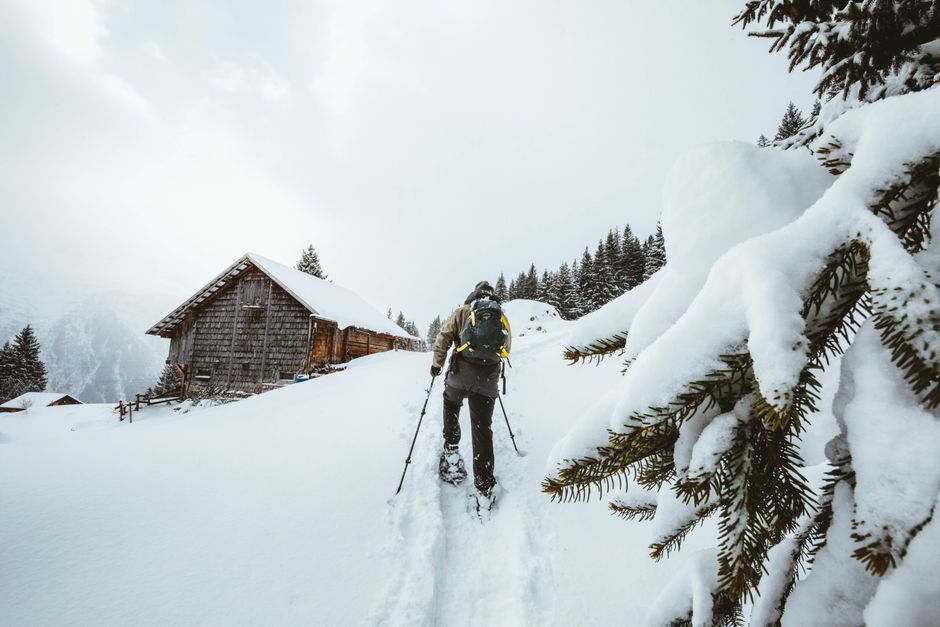
Rent snowshoes for the first day. Buying a pair before you know your preferred terrain is an expensive way to discover that fit, flotation, and traction matter more than appearance. A good rental shop can size the snowshoe for your total load: body weight, clothing, backpack, and any camera equipment.
Snowshoes: rent first, buy later
For a lighter beginner on marked paths, the TSL Smart is a sensible reference model. The listed beginner size suits users from 30 to 80 kg and uses a BOA fit system with 10 replaceable steel points. A 2026 Decathlon marketplace listing showed €177.50. That price makes renting the better choice for a single holiday.
The TSL 305 Original is a more technical option for harder snow and steeper tracks. It measures 55 by 20.5 cm, weighs 800 g per snowshoe, and has six crampons per foot plus front teeth. Its stronger traction is useful, but it is more snowshoe than most first-time visitors need.
Do not choose by boot size alone. A heavier walker may need a larger deck for flotation, while a small deck can feel nimble on packed trails. The correct beginner verdict is simple: rent a pair matched to your total load and route, then buy only after at least two or three outings.
Boots and poles matter more than expensive snowshoes
Wear waterproof mid-height hiking boots with enough room for one warm sock. The Quechua SH500 warm leather mid boot was listed at €64.99 and gave a stated comfort rating of -6°C when standing and -15°C while moving. Those ratings are product guidance, not a guarantee for every person. Test the boot with your actual snowshoe binding before leaving the shop.
Use poles with broad snow baskets. It is the best fit for a beginner who wants stable support on climbs and descents without buying specialist ski-touring poles.
Build warmth through layers, not one huge coat
Wear a moisture-moving base layer, a fleece or light insulated middle layer, and a shell that blocks wind and wet snow. The Quechua SH500 Ventil trekking trousers cost €59.99 on the Italian site and include ventilation zips and integrated gaiters, useful features when snow is deep around the boot. Warm merino-blend socks, such as the Decathlon SH500 MTN Mid listed at €17.99, help, but spare dry socks in the pack matter more than a premium label.
For gear, the clear winner is not the most technical model. It is a correctly fitted rental pair, waterproof boots, poles with snow baskets, and enough spare insulation to wait comfortably if the route changes.
What mistakes should beginners avoid in the Dolomites?
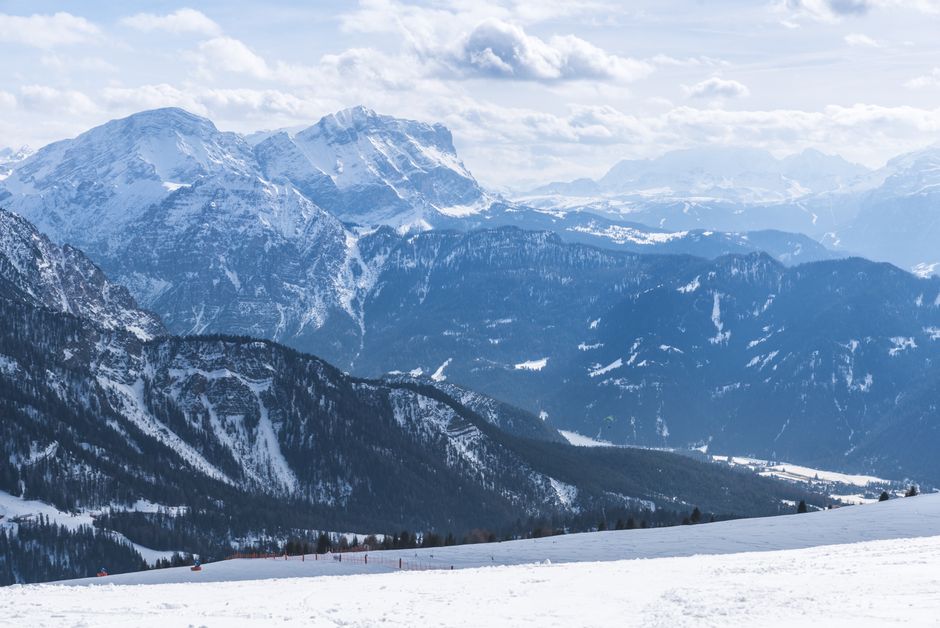
Most bad snowshoe days start with a reasonable plan that ignores one changing detail. These questions cover the failure points that deserve a firm answer.
Can I follow a summer hiking trail?
Not automatically. Snow hides signs, changes stream crossings, and makes steep summer paths harder to descend. Use a route published for winter, ask the local tourist office about current access, and turn around if the marked line disappears. Following another person’s tracks is not a navigation system.
Should I buy snowshoes for one February trip?
No. Rent for one trip, especially if you are flying or travelling between valleys. Buy after you know your usual snow conditions, total load, and preferred route length. A rental shop also lets you compare binding systems and deck sizes without paying for the wrong pair.
Can a fit beginner go alone?
For a first Dolomites snowshoe walk, no. Go with a guide or an experienced partner who knows winter navigation. Fitness helps with the climb, but it does not reveal a hidden avalanche path or restore a phone battery in freezing weather. A guided walk is also the fastest way to learn how to move downhill without slipping.
Return to the opening scene: you are in Cortina on a clear February morning, but now the plan is modest. You have a marked route, a forecast checked twice, a warm pack, and a turnaround time that leaves room for mistakes. The first snowshoe step still feels wide and clumsy. By the forest bend, it feels natural. That is the right scale for a Dolomites winter adventure: enough challenge to remember, enough judgment to come back smiling.