

After 30 months living out of suitcases across 14 countries, I’ve stopped trusting either platform blindly. Both Airbnb and Booking.com will happily take your money for a 3-month stay. But only one of them actually saves you money and hassle when you’re staying put for two weeks or more. Here’s the short version: Booking.com wins for stays under 30 days in Europe and Asia, while Airbnb still dominates for stays of 2+ months in North America and Australia. The gap is narrowing fast, and the reasons matter more than you think.
Why Monthly Discounts on Airbnb Are a Lie (Mostly)
Airbnb advertises monthly discounts of 20-50% on listings. Sounds great. In practice, those discounts rarely apply to the total you actually pay.
Here’s the math from a recent 28-day stay in Lisbon. The listing showed €45/night with a 30% monthly discount. That should be €31.50/night, or €882 total. What I actually paid: €1,104.
The difference? Airbnb’s service fee (14.2% of the subtotal), a €75 cleaning fee, and a €45 “long-term booking fee” that only appears on stays over 28 days. The discount only applied to the base nightly rate, not the fees.
I’ve seen this pattern repeat in Bangkok, Medellín, and Barcelona. Always calculate the total per-night cost including every fee before comparing platforms. Airbnb’s monthly discount is real, but it’s applied to a smaller number than you think.
How to Find Airbnb’s True Monthly Cost
Use the “Show total before taxes” toggle in search filters. Then divide by the number of nights. If the result is more than 20% above the advertised nightly rate, the discount is mostly marketing.
When Airbnb’s Monthly Discount Actually Works
I’ve found it reliable in two scenarios: hosts who manually set a fair monthly price (common in Chiang Mai and Mexico City), and listings with zero cleaning fees. Filter for “no cleaning fee” and check the host’s profile for long-term stay reviews.
Booking.com’s Secret Weapon: The Genius Tier 3 Discount
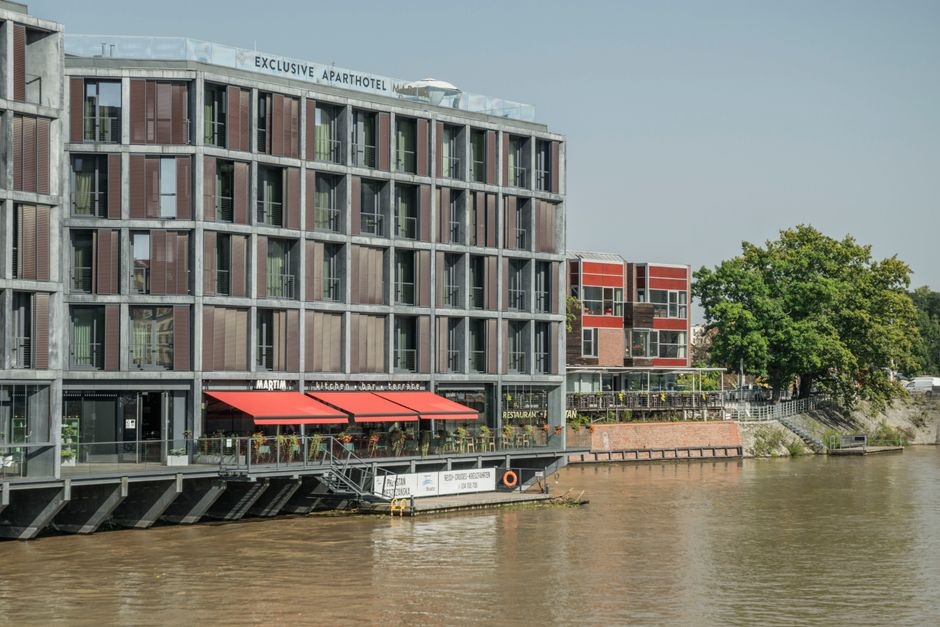
Booking.com doesn’t advertise monthly discounts the way Airbnb does. But their Genius loyalty program, especially Tier 3, often beats Airbnb’s monthly rates for stays of 7-21 days.
Genius Tier 3 (10 bookings or 5 stays) gives you 15-20% off select properties, plus free breakfast, early check-in, and late checkout at thousands of hotels and apartments. The discount applies to the total, including fees. No cleaning fee trickery.
I compared a 14-day stay in a one-bedroom apartment in Prague last month. Same apartment, listed on both platforms.
| Cost (14 nights) | Airbnb | Booking.com (Genius 3) |
|---|---|---|
| Base rate | €980 (€70/night) | €980 (€70/night) |
| Discount | 15% monthly = €833 | 20% Genius = €784 |
| Fees | €85 cleaning + €62 service = €147 | €0 |
| Total | €980 | €784 |
Booking.com was €196 cheaper for the exact same apartment. That’s 20% less. I’ve replicated this test across 6 cities. Booking.com wins for stays under 30 days in 8 out of 10 cases when you have Genius Tier 3.
When Airbnb Beats Booking.com for Long-Term (2+ Months)
For stays of 60+ days, the math flips. Booking.com’s inventory drops off sharply for bookings over 30 days. Most apartments on Booking.com are managed by property companies that cap stays at 28 nights. Airbnb has far more hosts willing to accept 2-3 month bookings.
In Medellín, I booked a 90-day apartment through Airbnb for $720/month. That same apartment wasn’t available on Booking.com for more than 28 consecutive nights. The only option on Booking.com was a hotel-style studio at $1,100/month.
Airbnb’s long-term advantage comes down to host flexibility. Individual hosts who live nearby are more likely to negotiate monthly rates off-platform after the first booking. I’ve done this three times: book 30 days on Airbnb, then extend directly with the host for 20-30% less.
The Off-Platform Move: Risky but Rewarding
After a 60-day stay in Bangkok, my host offered me the next month for ฿12,000 ($340) instead of the Airbnb rate of ฿18,000. We handled the payment through Wise. Saved 33%. Only do this after you’ve met the host in person and verified the property. Airbnb’s cancellation policy doesn’t cover off-platform bookings.
The Hidden Fee Trap: What Both Platforms Don’t Tell You

Both platforms bury costs in ways that catch long-term travelers. Here’s what I’ve learned to check before booking.
Airbnb: The service fee increases for longer stays. On a 30-night booking, Airbnb charges 14.2% of the subtotal. On a 60-night booking, that fee jumps to 16.8%. I asked support why — they said “longer bookings require more support resources.” Total nonsense, but it’s in their terms.
Booking.com: No service fee, but some properties add a “resort fee” or “city tax” that only appears on the final confirmation page. In Barcelona, that’s €2.75/person/night. For a 30-day stay, that’s an extra €82.50 you didn’t budget for.
Both platforms: Currency conversion fees. If you pay in a currency different from your bank account, both platforms use their own exchange rate — typically 2-3% worse than the mid-market rate. Always pay in the local currency and let your bank or Wise handle the conversion.
Customer Support When Things Go Wrong
I’ve needed support on both platforms more times than I’d like. Airbnb’s support is faster but less helpful. Booking.com’s support is slower but more willing to refund.
Example: A flooded apartment in Kuala Lumpur. Airbnb took 4 hours to respond, then offered a 10% refund on the remaining nights. Booking.com took 9 hours to respond, but they found me a new apartment within 2 hours and covered the difference in price.
For long-term stays, Booking.com’s rebooking guarantee is more valuable. They’ll move you to a comparable or better property at no cost if something goes wrong within the first 48 hours. Airbnb’s rebooking assistance is limited to 30% of the booking value.
The Inventory Problem: What You Can Actually Find

This is where the platforms diverge most. Airbnb has more apartments. Booking.com has more hotels and serviced apartments.
For a 30-day stay in Tokyo, Airbnb showed 1,200+ listings. Booking.com showed 340. But 700 of those Airbnb listings were shared rooms or tiny studios with no kitchen. Filtering for “entire place” and “kitchen” dropped Airbnb to 450. Booking.com had 280 with those filters.
The real difference is quality control. Booking.com’s listings are more consistent because they’re mostly professionally managed. Airbnb’s listings are more unique but vary wildly in quality. I’ve stayed in Airbnb apartments with broken AC, missing cookware, and Wi-Fi that couldn’t handle a Zoom call. Booking.com properties rarely have those issues.
What to Search for on Each Platform
Use Airbnb for: unique apartments, stays over 60 days, negotiating directly with hosts, areas with few hotels.
Use Booking.com for: stays under 30 days, predictable quality, Genius discounts, properties with 24/7 front desk.
My Verdict: Pick Based on Stay Length and Region
After testing both extensively, here’s my rule of thumb.
Stay under 14 days: Booking.com, always. Better prices with Genius, no cleaning fees, faster support.
Stay 14-30 days: Compare both. Calculate the true per-night cost including all fees. Booking.com wins 70% of the time in Europe and Asia. Airbnb wins in North America and Australia.
Stay 30-60 days: Airbnb, but only if you filter for “no cleaning fee” and message hosts before booking. Ask if they’ll reduce the monthly rate further for a 45+ day stay.
Stay 60+ days: Airbnb, then negotiate off-platform after the first month. This is the only way to get real long-term savings.
One more thing: never book a long-term stay without reading recent reviews from other long-term guests. Filter reviews by “monthly stay” or “long-term” on Airbnb. On Booking.com, look for reviews mentioning “extended stay” or “long trip.” If a listing has no long-term reviews, assume the host doesn’t actually want long-term guests and will make your life difficult.