
A child’s attention span, measured in minutes, is roughly equal to their age. A five-year-old gives you about five minutes before their brain demands a new stimulus. A 14-hour flight from New York to Tokyo contains 168 five-minute blocks. You do the math.
Most parents pack tablets loaded with apps and hope for the best. Courts have generally found that hope is not a strategy. What actually works, according to developmental psychologists and parents who’ve survived multiple long-haul flights, is structured interactive play that resets the child’s focus clock. This is not parenting advice—every kid is different—but these seven activities have a track record of working in the specific, confined, overstimulating environment of a plane cabin or car backseat.
1. The Sticker Geography Game
This solves a fundamental problem: kids on planes have no sense of where they are or why they’re still moving. The lack of spatial context fuels restlessness. Giving them a physical representation of the journey reduces anxiety and buys you time.
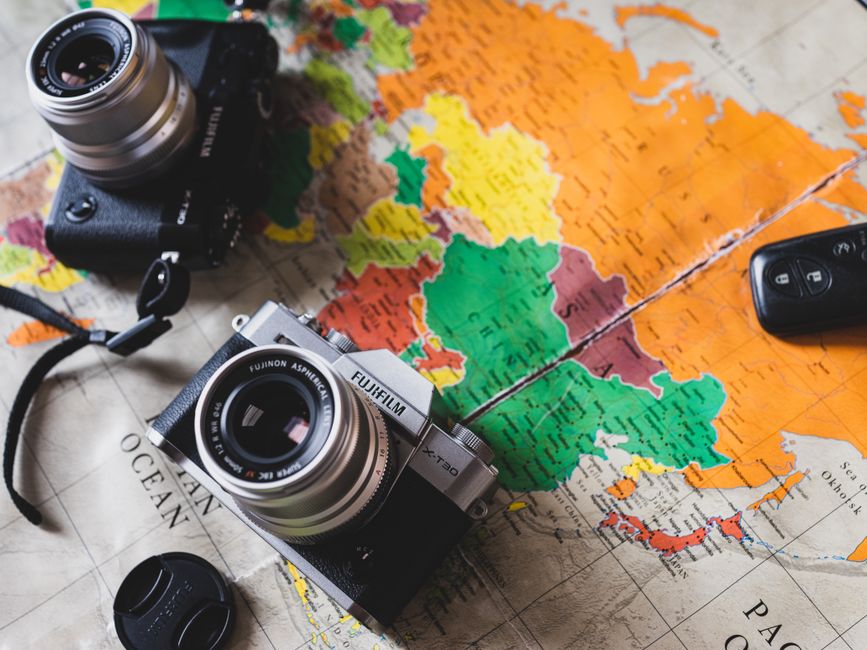
What you need: a small world map (Melissa & Doug make a reusable sticker map, $9.99), dot stickers in three colors, and the flight path from the in-flight entertainment screen. Before takeoff, mark the departure city with a green dot. Every time the map updates, the child places a yellow dot at the current position. A red dot marks the destination.
For road trips, replace the map with a printed Google Maps route. Kids under 6 typically engage for 15-20 minutes per update cycle. Older kids start asking questions about countries, time zones, and why Greenland looks so distorted on Mercator projections. Answer the first two. Google the third.
Age range: 4-10. Setup time: 3 minutes. Mess level: Zero, if you use reusable stickers.
2. Audio Story Bingo
Screen fatigue is real. A tablet’s blue light at close range in a dark cabin can trigger headaches in children within 90 minutes. Audio stories bypass this entirely while still occupying the narrative-hungry part of a child’s brain.
The Yoto Player (from $99.99) and its credit-card-sized story cards have become the default recommendation for travel precisely because they require no screen and no Wi-Fi. But the device is just hardware. The game layer matters more.
Create a bingo card with 16 squares. Each square contains a word or phrase likely to appear in the story—”dragon,” “whispered,” “suddenly,” “door.” The child marks squares as they hear the words. First to a row wins a small reward (a wrapped snack, a sticker, five minutes of tablet time). This converts passive listening into active engagement. A single Frog and Toad card from the Yoto library ($9.99) runs about 45 minutes. That’s 45 minutes of a quiet, focused child.
Failure mode: Too many squares overwhelm younger kids. For ages 3-5, use a 3×3 grid instead of 4×4.
3. The 20-Questions Travel Edition
No equipment. No setup. No cleanup. Just a framework that works in any seat configuration.
The standard 20 Questions game breaks down on planes because “animal, vegetable, mineral” doesn’t constrain the answer space enough. The travel edition narrows it: every answer must be something visible from your seat right now, something you packed in your carry-on, or something you’ve seen on the journey so far. This constraint eliminates frustration. A four-year-old can actually guess “the flight attendant’s badge” when the answer pool is limited to observable objects.
One parent starts as answerer. The child asks yes/no questions. The answerer provides one additional clue after question 10 if the child is struggling. This prevents the game from becoming a discouraging exercise in failure—a common reason kids abandon structured games mid-flight.
For siblings, alternate who answers. The competition dynamic keeps both engaged. A typical round lasts 8-12 minutes. Three rounds fill a solid half-hour.
4. Compact Card Games Worth the Carry-On Space
| Game | Price | Age | Table Space Needed | Why It Works on Planes |
|---|---|---|---|---|
| Uno Minimalist | $5.99 | 5+ | Tray table | Waterproof cards, half the deck size of standard Uno |
| Spot It! On the Road | $9.99 | 4+ | No table needed | Playable entirely in-hand, 30-second rounds |
| Monopoly Deal | $7.99 | 8+ | Tray table | Full game in 15 minutes, 110 cards pack flat |
| Taco Cat Goat Cheese Pizza | $9.99 | 7+ | Shared armrest | Loud but quick; save for daytime flights |
Spot It! On the Road deserves special mention. The tin is smaller than a deck of cards. The entire game consists of matching symbols between two circular cards, and it requires no surface—players hold their cards and slap when they spot a match. It works in turbulence. It works in the dark with the overhead light on. It works when one child is in the window seat and the other is in the middle. No other travel card game handles spatial constraints this well.
Monopoly Deal is the sleeper hit for 8-to-12-year-olds. It compresses the property-trading arc into 15 minutes flat. The strategic depth is genuine—adults won’t be bored playing it—and the thin deck slides into a passport pocket.
5. The Snack Probability Game
Hunger and boredom are chemically indistinguishable to a child’s brain. Low blood sugar triggers the same irritability response as understimulation. This game addresses both simultaneously.
Pack a mixed bag of small snacks: Goldfish crackers, M&Ms, raisins, pretzel sticks, dried mango strips. Before the flight, sort them into a partitioned container (the Sistema Lunch Cube, $12.99, has removable dividers and seals tight enough to survive cabin pressure changes).
The game: the child predicts how many of each snack type are in a randomly scooped handful. They write down the prediction, count the actual items, and calculate the difference. Correct predictions within a margin of two earn the snack. Incorrect predictions return the snack to the container for the next round.
This is stealth math practice. A first-grader working on counting and subtraction gets 20 minutes of focused engagement. The sugar from the rewards is metered out slowly enough to avoid the spike-and-crash cycle that produces mid-flight meltdowns. Parents in most states can confirm that a sugar-crashing six-year-old at 35,000 feet is a problem no in-flight entertainment system can solve.
When not to use this: On flights under two hours. The setup-to-playtime ratio isn’t worth it. For short hops, just hand over the pretzels.
6. Window Seat Scavenger Hunt

This only works if a child has window access, but when it works, it buys 40+ minutes of self-directed engagement. The key is specificity. “Find clouds” is worthless. “Find a cloud shaped like an animal and name the animal” works.
Prepare a checklist before departure:
- A river that bends at least three times
- A road with exactly one car visible on it
- A cloud formation that casts a shadow on the ground
- A body of water with a boat in it
- A town small enough to fit under your thumb at arm’s length
- A mountain peak with snow on it (route-dependent)
- Another airplane in the sky (rare; worth double points)
Each found item earns one point. The airplane sighting earns five. The child tallies points on a notepad. At the end of the flight, total points convert to a pre-negotiated reward—choosing the first family activity at the destination, picking dinner, an extra bedtime story.
This game fails when the checklist is too easy or too hard. Adjust based on the route. A flight over the Midwest requires different items than a flight over the Alps. Google Earth your flight path the night before and customize the list. Ten minutes of prep buys you nearly an hour of occupied child.
7. Audiobook-Guided Drawing
This is the nuclear option. Reserve it for the final third of a long-haul flight when all other activities have been exhausted and the child’s executive function reserves are depleted.
Equipment: a small sketchpad (Moleskine Cahier Journal, pocket size, $12.95 for a set of three), a set of colored pencils in a flat case (Faber-Castell makes a 12-pack that fits in a seatback pocket, $8.99), and a pre-downloaded audiobook chapter. The Yoto Player handles this, but so does any phone with a splitter for two sets of headphones.
The instruction: “Draw what you hear.” That’s it. No further rules. The child listens to a descriptive passage—the opening chapter of The Hobbit, a section from The Wild Robot, a nature podcast episode—and translates the audio into images. There is no right or wrong output. The open-endedness prevents frustration. The audio provides structure.
This activity reliably produces 30-45 minutes of absorbed silence. The drawing occupies fine motor skills. The audio occupies language processing. Together they leave very little cognitive bandwidth for complaining about how long the flight is taking. A parent on the Singapore Airlines New York-to-Singapore route (currently the world’s longest commercial flight at roughly 19 hours) reported that a single Roald Dahl audiobook and a sketchpad covered nearly three hours of the journey, broken into two sessions.
Age range: 5-12. Younger kids need simpler audio and will produce abstract scribbles. That’s fine. The goal is absorption, not art.
Pack the sketchpad and pencils last so they’re accessible without opening the overhead bin. Nothing kills momentum like standing in the aisle digging through a carry-on while a child’s attention window closes.
The single most important takeaway: structured, rules-based activities outlast open-ended “just play with this” distractions by a factor of three, because they give a child’s brain a problem to solve rather than a passive experience to consume.