
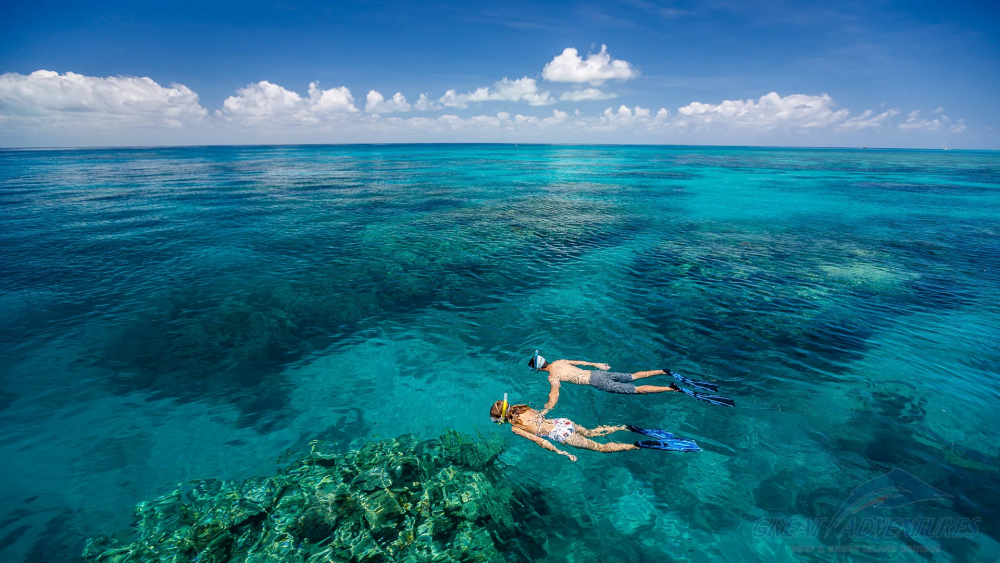
Queensland is bigger than Texas and Montana combined. You can’t see everything in one trip. After spending six weeks driving from Brisbane to Cape Tribulation, I found the real standouts aren’t always the ones on postcards. Here are the nine attractions worth your time and money — ranked by actual experience, not brochure hype.
1. Great Barrier Reef: Which section actually delivers
The Reef stretches 2,300km. Most tourists see the same crowded pontoon near Cairns. That’s a mistake.
The best coral health sits in the outer ribbon reefs, 70km offshore. Operators like Passions of Paradise run smaller boats (max 45 people) to Flynn Reef and Milln Reef. Cost: $225 per adult. You get 4-5 hours of snorkeling at two different sites. Water visibility averages 18-25 meters in winter (June-October).
Compare that to the big pontoon operators. Quicksilver takes 350 people to Agincourt Reef. Same price. More crowds. Less time in the water.
When the Reef disappoints
November to March brings stinger season (box jellyfish) and lower visibility from rain runoff. The water turns green-brown near shore. If you’re traveling in wet season, fly to Lady Elliot Island ($399 return from Brisbane, includes reef tour). The southern reef has clearer water year-round and you can swim with manta rays from May to August.
Liveaboard vs day trip
A 3-day liveaboard with Mike Ball Dive Expeditions costs $1,295 and reaches the remote Cod Hole and Osprey Reef. You’ll see sharks, potato cod, and giant clams. Day trippers don’t get that. But if you get seasick easily — the outer reef gets rough — stick to the sheltered inner fringing reefs off Port Douglas.
2. Daintree Rainforest: The Mossman Gorge vs Cape Tribulation tradeoff
Two main sections. Very different experiences.
Mossman Gorge is 20 minutes from Port Douglas. It’s well-maintained, has a 2.7km walking loop, and the swimming hole is safe for families. Entry costs $59 per adult (includes shuttle bus). The water stays 23°C year-round. You’ll see blue Ulysses butterflies and Boyd’s forest dragons if you walk slowly.
Cape Tribulation sits 45 minutes north. The road turns to gravel after the Daintree River ferry ($35 return per car). You need a 4WD in wet season. The payoff? Empty beaches where rainforest meets reef. You can walk 20 meters from the carpark and see zero people. No infrastructure. No cafes. Just jungle and ocean.
My pick: Do Mossman Gorge in the morning (arrive by 8am before the bus crowds hit), then drive to Cape Tribulation for the afternoon. Stay overnight at PK’s Jungle Village (dorm $45, private $130). Night walks with Cooper Creek Wilderness ($85) show you tree kangaroos and luminescent fungi.
3. Whitsundays: Hill Inlet lookouts and the real Whitehaven Beach experience
Whitehaven Beach gets called the world’s most photographed beach. The photos are accurate. The reality of getting there is not.
Every tour stops at the main beach for 90 minutes. That’s not enough time to see Hill Inlet — the famous swirling sand pattern you see on Instagram. The lookout is a 1km uphill walk from the beach. Most tour schedules skip it to save time.
Book with Ocean Rafting ($199). Their 85-person rigid inflatable boats reach the Tongue Bay landing point, which puts you 200 meters from the Hill Inlet lookout. You get 45 minutes at the lookout plus 2 hours on the beach. They also include snorkeling at Hook Island’s fringing reef — better coral than the main reef tours.
If you have $500 to spend, a scenic flight with GSL Aviation (55 minutes, departs Airlie Beach) gives you the full perspective. You see Heart Reef, the entire Whitehaven sandbar, and the 74 islands. Worth every dollar for the photos alone.
The Whitsundays mistake everyone makes
Don’t stay on Hamilton Island unless you have kids. It’s expensive ($400+/night for basic rooms) and everything requires a golf cart rental ($85/day). Stay in Airlie Beach instead. Magnums Backpackers has doubles for $90/night. The lagoon pool is free. You can walk to the marina for all tours. Save $200 a day and use it for flights or better restaurants.
4. Gold Coast theme parks: Which one is worth your money in 2026
The Gold Coast has four major parks within 20 minutes of each other. Prices have climbed steeply. A single-day ticket to any park costs $109-$129. A 3-park pass costs $249. Pick carefully.
Dreamworld ($109) — Best for families with kids under 12. The Tiger Island exhibit and ABC Kids World keep young children entertained. But the thrill rides are aging. The BuzzSaw and The Claw have been removed. The park feels tired.
Warner Bros. Movie World ($119) — Best for teenagers and adults. The DC Rivals HyperCoaster (89km/h, 61m drop) is genuinely world-class. Superman Escape and the new Flash Speed Force launch coaster deliver real adrenaline. Skip the shows — they’re cheaply produced.
Sea World ($129) — Best for marine life lovers. The new Jet Rescue coaster and Storm Coaster are solid, but the real draw is the dolphin and seal presentations. They’ve moved away from captive breeding and now focus on rescue and rehabilitation. The penguin exhibit is excellent.
Wet’n’Wild ($99) — Best for hot days. The Aqua Loop and Kamikaze slides are intense. The wave pool is massive. But the concrete gets burning hot by 11am. Wear water shoes. Bring sunscreen that won’t wash off.
My verdict: If you only do one park, pick Movie World. The coaster lineup beats anything else in Australia. If you have kids under 12, pick Dreamworld for the variety. Skip Wet’n’Wild unless it’s 35°C+.
5. K’gari (Fraser Island): 4WD self-drive vs guided tour — the real numbers
K’gari is the world’s largest sand island. 123km long. No sealed roads. No fuel stations beyond the barge. You need a 4WD. Here’s what that actually costs.
| Option | Cost per person | Duration | What’s included |
|---|---|---|---|
| Self-drive (4 people, 3 days) | $450 | 3 days | 4WD rental ($300/day split), barge ($180 return split), permits ($60), fuel ($80), food ($100) |
| Tag-along tour (4WD provided) | $650 | 3 days | Vehicle, guide, meals, camping gear, permits, barge |
| Comfort tour (minibus + walks) | $495 | 2 days | Transport, accommodation at Kingfisher Bay Resort, meals, guided walks |
Self-driving gives you freedom. You can camp at Lake McKenzie (no facilities, just sand and water) or at Central Station (hot showers, $12/night). But the sand driving is brutal. Soft sand requires dropping tire pressure to 18psi. You will get stuck if you don’t know what you’re doing. I saw three vehicles bogged in one afternoon near Ngkala Rocks.
The tag-along tour with Drop Bear Adventures ($650, 3 days) handles the driving. You follow a guide in a lead vehicle. They cook meals, set up camp, and know which creek crossings are safe at high tide. You see the Maheno Shipwreck, Eli Creek, and Indian Head. Worth the extra $200 if you’ve never driven sand.
Skip the comfort tour unless you’re 65+ or have mobility issues. You miss the best parts — camping under stars at Lake McKenzie, watching dingoes walk past your tent at dawn.
6. Lamington National Park: The best rainforest walking in Australia
Lamington sits 90 minutes from Brisbane. It holds 160km of walking tracks through Gondwana rainforest — 180-million-year-old plant communities. The air temperature stays 8-10°C cooler than Brisbane. Perfect for summer escapes.
The Tree Top Walk at O’Reilly’s is the famous one. A 180m suspension bridge 15 meters above the forest floor. Free to walk. You’ll see regent bowerbirds and crimson rosellas up close. Arrive before 9am or after 3pm to avoid the bus crowds.
The real magic is the Border Track. 21.4km from O’Reilly’s to Binna Burra. Takes 7-8 hours one-way. You walk through ancient Antarctic beech trees — some are 3,000 years old. The track is well-maintained but steep in sections. Carry 3 liters of water. There’s no water source on the trail. Start at O’Reilly’s at 6am and arrange a pickup at Binna Burra.
Stay at O’Reilly’s Rainforest Retreat (cabins from $250/night) or Binna Burra Lodge (shared cabins from $180/night). Both have hot showers and restaurant meals. Book three months ahead for weekends.
7. Brisbane: The cultural precinct and river walk you’re missing
Most travelers fly into Brisbane and leave immediately. That’s a mistake. The city has quietly built one of Australia’s best free-attraction lineups.
Queensland Art Gallery and Gallery of Modern Art (QAGOMA) sits on the South Bank. Free entry. The permanent collection includes Indigenous art, Pacific Islander works, and rotating international exhibitions. The current Asia Pacific Triennial (runs through April 2026) features 70 artists from 30 countries. Allow 3 hours minimum.
The South Bank Parklands has a free swimming lagoon (open 7am-6pm daily). The water is chlorinated and filtered. Change rooms and lockers cost $2. Pack a picnic. The riverfront walk stretches 5.5km from the City Botanic Gardens to the University of Queensland. You pass the Wheel of Brisbane ($22 for a 15-minute ride) and the Nepalese Peace Pagoda.
Eat Street Northshore (Friday-Saturday nights, $5 entry) is a shipping container market with 70 food stalls. The lobster rolls from Brisbane Lobster ($18) and the pork belly bao from Mr Bao ($12) are worth the trip alone. Go at 4:30pm when it opens to avoid the 6pm crowd crush.
8. Port Douglas: The smarter base for reef and rainforest
Port Douglas sits 45 minutes north of Cairns. Smaller. Quieter. Better positioned for both the Reef and Daintree.
Four Mile Beach is the main attraction. Stinger net is up from November to May. No crocs in the swimming area. The beach runs 4km with the Daintree Range in the background. Free parking at the southern end. Rent a SUP board from Port Douglas Stand Up Paddle ($35/hour) and paddle the creek mouth at low tide.
The Sunday Markets (7am-1pm, Macrossan Street) sell local honey, macadamia nuts, and handmade soaps. The fresh coconut water ($5) with pulp scooped out beats anything bottled.
Stay at Port Douglas Peninsula Boutique Hotel (rooms from $280/night) for the location — 2-minute walk to the marina and 5 minutes to the beach. Or Dougies Backpackers (dorm $38, double $95) if you’re on a budget. Both have pools. Both are clean.
9. When to go and what to pack for each region
Queensland spans 2,000km north to south. The climate varies wildly. Here’s the breakdown by region.
Far North Queensland (Cairns, Daintree, Port Douglas) — Dry season June-October is perfect. 26°C days, 18°C nights, zero rain. Wet season November-April brings 200mm+ of rain per month and 85% humidity. Cyclones are rare but real. Pack: reef-safe sunscreen (30+ SPF), insect repellent with DEET, rash guard for snorkeling, quick-dry towel.
Whitsundays and Great Barrier Reef islands — Best months August-October. Water temperature hits 24°C. Visibility underwater peaks at 25-30 meters. Stinger season runs November-May. Pack: stinger suit (many tours provide them, but bring your own for $30), polarized sunglasses, dry bag for boat trips.
South East Queensland (Brisbane, Gold Coast, Lamington) — Year-round destination. Summer (December-February) hits 30°C with afternoon storms. Winter (June-August) is 20°C and sunny. Pack: layers for evenings (it drops to 10°C in winter), rain jacket for summer storms, hiking boots for Lamington.
K’gari — Best in April-May or September-October. Avoid summer heat (35°C on sand) and winter wind. Pack: 4WD recovery tracks ($30), tire pressure gauge, 10 liters of water per person per day, insect repellent (the sandflies at sunset are brutal).