
Skip Paris if your daily budget is under €200 per person. That’s the honest answer. The city is extraordinary — but so are Lyon, Porto, Budapest, and Bruges, and they cost 40 to 60 percent less for the same core experience: great food, stunning architecture, world-class museums, and the feeling of being somewhere genuinely alive.
This isn’t about settling. It’s about spending your travel money where it actually goes furthest.
Why Paris Burns Through Your Budget Before You’ve Done Anything
Paris isn’t expensive because it’s a tourist trap. It’s expensive because 15 million visitors a year compete for the same 200,000 hotel rooms, and the city knows exactly what that supply-demand gap is worth. Hotels near anything worth seeing — the Marais, Saint-Germain, Montmartre — run €150 to €250 per night for a basic double. A glass of wine at a sidewalk café in the 6th arrondissement: €9 to €13. A crêpe from a street cart near Notre-Dame: €7.
The Louvre costs €22 per adult. Versailles is €19.50 for the palace, another €10 for the gardens on fountain days. Add Metro transport (a single ride is €2.15, a day pass is €15.80), and two people doing Paris properly for four days will spend €1,200 to €1,600 without trying hard. That’s before a single nice dinner.
The Hotel Squeeze
Paris hotel prices jumped roughly 18% between 2026 and 2026, driven partly by the Olympic renovation wave that never fully deflated. A three-star hotel in the 10th or 11th arrondissement — not the postcard areas — costs €130 to €160 per night. The same quality rating in Lyon costs €70 to €100. In Porto: €55 to €80. In Budapest: €45 to €70. The savings on accommodation alone can fund another two or three nights of travel.
The Food Gap Is Where It Gets Absurd
A lunch formule — starter, main, glass of wine — in a Paris bistro runs €22 to €30 per person. The same format in Lyon, which is actually France’s culinary capital, costs €14 to €22. In Porto, a full sit-down dinner with wine for two people costs €25 to €35 total. Not per person. Total. These aren’t budget dives — they’re the local restaurants that residents actually use.
Full Daily Cost Comparison
| Expense | Paris (2 people) | Lyon | Porto | Budapest |
|---|---|---|---|---|
| Hotel (3-star) | €150–220 | €80–110 | €60–90 | €50–80 |
| Lunch | €50–65 | €30–45 | €20–30 | €15–25 |
| Dinner | €70–100 | €45–65 | €30–45 | €20–35 |
| Daily transport | €16–20 | €8–12 | €6–10 | €4–8 |
| Attractions | €30–50 | €10–20 | €10–15 | €15–25 |
| Daily Total | €316–455 | €173–252 | €126–190 | €104–173 |
On a 5-day trip, the gap between Paris and Porto saves a couple roughly €900 to €1,300. That’s a second trip somewhere else.
Lyon Is the Paris Alternative Most Travelers Walk Past
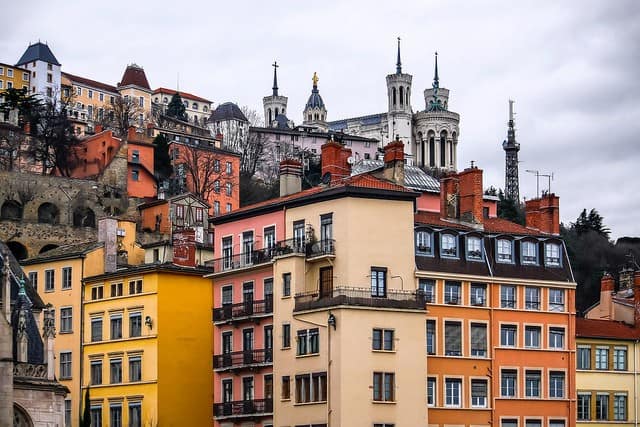
Lyon is France’s second city and, by serious culinary consensus, the country’s food capital. Paul Bocuse built his reputation here, not in Paris. The city has a UNESCO-listed old town — Vieux-Lyon — with 15th-century architecture, cobbled streets, and a network of hidden traboules (covered passageways connecting courtyards and streets) that most tourists never discover because they’re busy queuing for the Eiffel Tower elevator.
The Food Scene Genuinely Outperforms Paris
The bouchon tradition is Lyon’s defining contribution to French dining. These small, fixed-menu restaurants serve traditional Lyonnaise food: quenelles de brochet, tablier de sapeur, gratin dauphinois, tarte praline. Café Comptoir Abel — open since 1928 — serves three-course lunches for €18 to €24 with wine. Bouchon Les Lyonnais runs a similar format at similar prices. Both are walk-in friendly on weekday lunches. In Paris, €24 gets you a crêpe, a coffee, and a receipt that hurts.
The Halles de Lyon Paul Bocuse market — a two-floor covered food hall — is worth half a day on its own. Forty-eight vendors selling local charcuterie, Bresse chicken, St-Marcellin cheese, and Burgundy wines at near-wholesale prices. Entrance is free. It’s what Les Halles in Paris used to be before it became a shopping mall.
Old Town Lyon vs. Montmartre
Both neighborhoods are genuinely beautiful. Montmartre gets 10 million visitors a year; Vieux-Lyon gets a fraction. You can walk into a café in Vieux-Lyon and sit immediately. In Montmartre, you’ll wait 40 minutes for a table and pay a premium for the Instagram location. The Musée des Beaux-Arts de Lyon — one of France’s best fine arts collections — costs €8 and is half-empty on weekday afternoons.
Getting There Cheaply
The TGV from Paris Gare de Lyon to Lyon Part-Dieu takes exactly 2 hours. Book the SNCF Ouigo service specifically — these are the budget-tier high-speed trains that cover the same route for €10 to €35 when booked through Trainline or the SNCF Connect app 3 to 6 weeks ahead. Standard TGV on the same line costs €60 to €110 last-minute. Ouigo opens booking 90 days out. Set a reminder and grab tickets when they drop.
Porto, Budapest, and Bruges: Three Cities That Actually Deliver
Lyon is the safest swap. These three cities cover different travel profiles — and different distances from Paris.
-
Porto, Portugal — Best for travelers who want Mediterranean warmth, wine culture, and Atlantic coastline within reach.
Porto costs roughly 55% less than Paris per day. The Ribeira district along the Douro River is one of the most photogenic urban waterfronts in Europe — azulejo-tiled buildings, laundry between balconies, port wine caves directly across the river in Vila Nova de Gaia where you can taste five vintages for €12 at Taylor’s or Graham’s. The restored Mercado do Bolhão food market covers two floors of local produce, seafood, and pastel de nata for €1.20 each.
Porto’s signature dish, the francesinha — a layered meat sandwich drowned in beer-tomato sauce — costs €9 to €13 at places like Café Santiago on Rua Passos Manuel. Livraria Lello, the ornate 1906 bookshop that gets cited as inspiration for Harry Potter’s Hogwarts library, costs €5 to enter (deducted from any book purchase). A full dinner for two with a bottle of local Douro red: €30 to €40 at restaurants that would cost three times that in Paris’s equivalent tourist zone.
Flights from Paris CDG to Porto run €30 to €80 on Ryanair or Vueling. Book 6 to 8 weeks out via Google Flights with a price alert set. Check both CDG and Paris Orly — Vueling uses Orly for some Porto routes at lower fares. -
Budapest, Hungary — Best for travelers who want grand architecture, thermal baths, nightlife, and maximum city for minimum spend.
Budapest is Europe’s most underrated capital. The Hungarian Parliament building along the Danube at dusk rivals anything on the Seine. The Széchenyi Thermal Bath — a 1913 baroque outdoor pool complex — costs €30 for a full day, roughly what a single Paris museum ticket costs. The ruin bar scene in the 7th District Jewish Quarter runs on €2 to €4 beers; start at Szimpla Kert, the original, which occupies a crumbling pre-war building across two floors and a courtyard. It’s free to enter, open from noon, and nothing like it exists in Paris.
For a proper dinner, Borkonyha in the 5th District holds one Michelin star and charges €40 to €55 per person with wine pairings — less than a mediocre tourist bistro in Paris’s 1st arrondissement. The city’s transit system covers everywhere worth going: a 24-hour pass costs €5.50, a 72-hour pass is €14.50.
Wizz Air and Ryanair both fly Paris to Budapest from €25 to €70. Wizz Air’s baggage rules are strict: a cabin bag up to 40×30×20cm is free, anything larger costs €25 to €40 extra each way. Pack accordingly or factor it in. -
Bruges, Belgium — Best for short trips, medieval atmosphere, craft beer, and travelers who hate flying.
Bruges is 3 hours 20 minutes from Paris by train — Eurostar or Thalys to Brussels, then an IC train to Bruges on the Belgian SNCB network. No airport, no security queue, no Beauvais bus. The IC train Brussels-Bruges costs €16.20 each way and runs every 30 minutes. Bruges hotel prices run €90 to €140 per night — the most expensive of these four alternatives, but still 30 to 40% below comparable Paris rates.
The medieval canal system, the Gothic market square, the Basilica of the Holy Blood, and the Church of Our Lady (containing a Michelangelo Madonna sculpture, €7 entry) are all within a 20-minute walk of each other. Belgian street food — frites with stoofvlees sauce, waffles from street stalls, mussels-frites at €18 to €22 for a full kilo — beats anything in the same price range in Paris. A tasting and tour at De Halve Maan brewery costs €14 and covers the city’s last remaining family-owned brewery plus two beers. Bruges gets overwhelmed on summer weekends — book midweek in April, October, or November for 20% lower accommodation prices and actually quiet streets.
The Move That Cancels Your Savings
Booking Lyon in August at peak rates and flying full-fare from Charles de Gaulle to Porto converts a €900 saving into a €150 saving. The cheaper-city math only works if the transport and timing are also cheap. Travel mid-week, avoid late July through August, Christmas week, and Easter — and use budget carriers or advance rail booking. The destination is half the equation.
How to Actually Book These Trips
The concrete recommendation: use Trainline for Lyon and Bruges rail legs, set Google Flights price alerts for Porto and Budapest 8 weeks out, and book accommodation through Booking.com’s Genius tier or Airbnb depending on the city. Here’s the exact setup for each.
Rail Booking for Lyon and Bruges
For Lyon: open the Trainline app or the SNCF Connect app and filter for Ouigo services on the Paris Gare de Lyon to Lyon Part-Dieu route. Tickets open 90 days ahead. The cheapest fares (€10 to €20) go in the first 48 hours of availability and in off-peak departure windows — early morning or mid-afternoon weekday trains. Don’t pay for seat upgrades on Ouigo; assigned seating is standard and the journey is 2 hours.
For Bruges: book the Paris–Brussels leg through Trainline (Eurostar from Paris Gare du Nord, from €39 advance). Then buy the Brussels-Midi to Bruges IC ticket separately on the SNCB website — it’s €16.20 each way, no advance booking needed. The total journey from Paris city center to Bruges city center is under 3.5 hours and involves one platform change at Brussels-Midi.
Flights for Porto and Budapest
Open Google Flights, set the departure airport to Paris (all airports) and check price calendars for Porto and Budapest over a 6-week window. Enable price alerts. Ryanair operates from Paris Beauvais, which adds a 90-minute Ryanair bus journey (€17 each way, book on Ryanair’s site) — annoying, but worth it when the base fare is €19 versus €90 from CDG. Vueling and TAP Air Portugal fly CDG to Porto; Wizz Air offers the most competitive Budapest fares. Account for Wizz Air’s strict carry-on sizing before booking.
Accommodation by City
Lyon and Porto: Airbnb apartments in the old town areas (Vieux-Lyon’s 5th arrondissement, Porto’s Bonfim or Cedofeita neighborhoods) typically undercut hotels by 25 to 35% and add kitchen access — which cuts food costs further when you’re buying from markets.
Budapest and Bruges: Booking.com‘s Genius discount tier (free to activate, triggers after 2 completed stays) saves 10 to 15% on most property listings. In Budapest, book in the 5th, 6th, or 7th districts. In Bruges, anything within 15 minutes of the Markt covers the entire city — it’s small enough that location barely matters.
For a first trip using this approach: start with Lyon. Two hours from Paris, same country, same language, same currency — and genuinely better food at lower prices. It’s the zero-risk test of whether a Paris alternative actually delivers. It does.