

I checked into a “certified eco-resort” in Manuel Antonio last February that had single-use plastic shampoo bottles in every room, air conditioning blasting with the balcony doors wide open, and a “reforestation program” that consisted of one sad potted plant in the lobby. Their nightly rate? $480.
Costa Rica has a greenwashing problem. The country markets itself as the world’s eco-tourism capital—and in many ways it is—but for every genuinely regenerative property, there are three that slapped a “green” label on their website and called it a day. The certification landscape is a mess too. CST (Certification for Sustainable Tourism) scores range from 0 to 5 leaves, but plenty of 4-leaf properties are cutting corners you’d never notice unless you knew what to look for.
This list is six properties I’ve either stayed at personally or vetted through people I trust. I’m including exact 2026 high-season pricing, what makes each one legitimately sustainable, and the specific greenwashing tactics that should make you run the other way.
The Certification Trick: Why “Eco” Labels Mean Almost Nothing
Here’s the uncomfortable truth: most eco-certifications in Costa Rica are self-reported checklists with zero on-site verification. A hotel fills out a form claiming they compost, they get a badge. Nobody checks.
The only two certifications that require actual third-party audits are Rainforest Alliance Verified and B Corp certification. If a property doesn’t have one of those two, I treat their sustainability claims as marketing until I see evidence otherwise. The CST leaf-rating from the Costa Rican tourism board is better than nothing, but I’ve stayed at 5-leaf properties that were less sustainable than some 2-leaf ones simply because the 2-leaf property was too small and too busy actually doing the work to fill out government paperwork.
What to Actually Look For
Skip the badges. Ask three questions when booking:
- Where does your electricity come from? The right answer is on-site solar or micro-hydro with a specific percentage. “We buy green energy credits” is a cop-out.
- What happens to your greywater? Properties that genuinely care can explain their filtration system. Vague answers mean it’s going straight into the ecosystem untreated.
- Who owns the land and who works here? The best eco-lodges are either community-owned or employ 80%+ local staff at management levels, not just as groundskeepers.
If the booking agent can’t answer these three questions in under two minutes, you’re looking at a greenwashed property.
Lapa Rios Lodge: The Gold Standard That Actually Earns Its Price
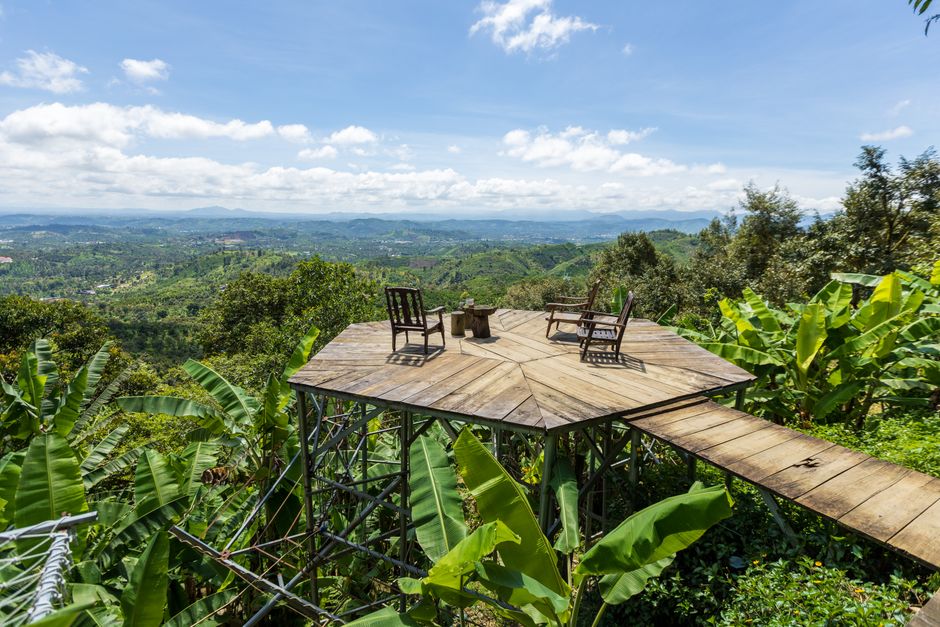
Lapa Rios sits on 1,000 acres of private reserve on the Osa Peninsula, and they’ve been doing this since 1993—long before eco-tourism was a marketing term. This is the property I recommend when someone says “I want the real thing and I’ll pay for it.”
Their 17 bungalows are open-air with no glass windows, just screens. No air conditioning. Ceiling fans and the Pacific breeze do the work. The structures are built from locally harvested materials, and the entire operation runs on solar with a biogas backup system for the kitchen. They employ 60 staff, 55 of whom are from the local community, and they fund the area’s only primary school.
| Detail | 2026 High Season |
|---|---|
| Nightly rate (double occupancy) | $520–$680 |
| Includes | All meals, guided hikes, transfers from Puerto Jiménez |
| Best for | Wildlife immersion, serious birders, honeymooners |
| Not ideal for | Anyone who needs AC to sleep |
| WiFi situation | Lobby only. Cabins are intentionally offline. |
The food is exceptional—three plated meals a day built around what’s growing on-site and what local fishermen brought in that morning. No buffet, which means almost zero food waste. The guided walks are led by naturalists who can identify 300+ bird species by call alone. You’ll see all four monkey species, tapirs if you’re lucky, and enough scarlet macaws to make you blasé about scarlet macaws.
The tradeoff is comfort. The beds are firm, the howler monkeys start at 4:30 AM, and you will share your shower with a friendly gecko. If that sounds like a dealbreaker rather than a feature, skip to the next property.
Pacuare Lodge: You Can’t Drive There, and That’s the Point
Pacuare Lodge is accessible only by raft or by a cable car across the Pacuare River. No road. No parking lot. The journey in is a class III-IV rafting trip that takes about 90 minutes depending on water levels. Your luggage arrives separately in dry bags. If you have mobility issues or young children, this is not your lodge. For everyone else, the inaccessibility is the entire appeal.
The property runs on a micro-hydro turbine they built in the river, generates 100% of their own power, and their wastewater system returns water cleaner than when they pulled it from the river. They employ primarily indigenous Cabécar community members and have a joint land-management agreement that gives the community veto power over any expansion plans.
Pricing in 2026 starts at $390 per night for a river-view suite, $620 for the “Nest” suite built on a platform 60 feet up in a kapok tree. Both include breakfast and dinner. Lunch and alcohol are extra. The canopy suite is the one to book if you can swing it—falling asleep to the sound of the river below you with nothing but screens between you and the canopy is genuinely one of the best hotel experiences I’ve ever had.
The food is good, not great. That’s my one knock on Pacuare. For $600+ a night, I want more than competent Costa Rican standards. The coffee is excellent though—they grow and roast their own.
Three Greenwashing Red Flags I Wish I’d Known Earlier
I’ve booked enough duds to spot the patterns. Here’s what separates the real operations from the marketing.
The “Eco” Pool. If a property advertises a chlorinated infinity pool as part of its eco-experience, it’s not an eco-lodge. Maintaining a pool in the rainforest requires massive amounts of chemicals, water, and energy. The genuinely sustainable properties don’t have pools, or they have natural swimming holes fed by streams. A pool isn’t automatically disqualifying, but if it’s front and center in their marketing while their conservation work is a vague paragraph on the “About” page, you know where their priorities are.
The Towel Washing Card. You know the one—”hang your towel to save the planet!” It’s the cheapest possible sustainability gesture and it costs the hotel nothing. If that’s the extent of their visible eco-program, they’re not doing anything meaningful behind the scenes either. Real operations have composting systems, greywater treatment, on-site energy generation, and reforestation programs you can walk through and see.
The “Supports Local Community” Claim with No Details. Every hotel website in Costa Rica says this. The real ones tell you exactly how: “We source 80% of produce from 12 farms within 15 kilometers” or “Our staff is 90% local with profit-sharing.” If the claim is generic, assume it’s a lie.
Finca Rosa Blanca: The Coffee Plantation That Does Everything Right
Finca Rosa Blanca is in the Central Valley, 20 minutes from San José airport, which makes it the most accessible property on this list. It’s also the best example I’ve found of a luxury property that’s genuinely sustainable without making you sacrifice comfort. Air conditioning, heated bathroom floors, rainfall showers—all powered by solar panels that cover 70% of their energy needs.
The property is an organic shade-grown coffee plantation first, hotel second. They produce about 2,000 pounds of coffee annually, all of which is served on-site or sold directly to guests. The coffee tour here isn’t a tourist trap—it’s a walk through an actual working farm where you’ll learn more about sustainable agriculture in two hours than most people learn in a lifetime.
Rates in 2026 run $310–$450 per night including breakfast. The Master Suite ($450) has a private terrace overlooking the coffee fields and the volcanoes in the distance. The villas ($380) are two-story with a separate living area and work well for families.
This is my pick for anyone who wants the eco-experience without roughing it. It’s also the best choice for a first or last night near the airport that’s not a generic Marriott. The restaurant, El Tigre Vestido, sources 90% of ingredients from within 30 kilometers and does a farm-to-table tasting menu for $65 that’s worth every colón.
When You Should Skip the Eco-Lodge Entirely
Eco-lodges are not for everyone, and forcing it leads to miserable trips. Skip the eco-lodge and book a standard hotel if:
- You can’t sleep without AC. Most genuine eco-lodges on the Osa Peninsula and Caribbean coast don’t have it. The humidity is real, and you’ll be miserable if you’re sensitive to heat.
- You’re terrified of insects. Open-air rooms mean bugs. Not infestations—just the normal rainforest inhabitants. If a moth in your room ruins your night, book a sealed hotel with screens and AC.
- You need reliable high-speed WiFi. Many eco-lodges have limited connectivity by design. If you’re working remotely and need video calls, check connectivity specifics before booking. Finca Rosa Blanca and Origins Lodge have solid WiFi. Lapa Rios and Pacuare do not.
- You’re on a tight budget. The real eco-lodges start around $300/night. Below $200, you’re almost certainly getting greenwashing. Budget travelers should look at community-run ecolodges like those in the Talamanca region, which are simpler but legitimate.
There’s no shame in booking a regular hotel. The shame is in paying eco-lodge prices for a property that isn’t doing the work.
The 2026 Pricing Reality: What You Actually Get at Each Tier
Eco-lodge pricing in Costa Rica has jumped about 15% since 2026, driven by post-pandemic demand and the country’s broader shift toward high-value tourism. Here’s what each price tier actually delivers in 2026.
| Price Tier | Nightly Range | What You Get | What’s Usually Missing |
|---|---|---|---|
| Budget Eco | $120–$200 | Basic cabina, shared bathrooms sometimes, community-owned, genuine conservation ethic | Hot water, WiFi, guided activities, restaurant |
| Mid-Range | $250–$400 | Private bungalow, hot water, good on-site restaurant, some guided activities included | AC, luxury finishes, spa services |
| Premium | $450–$700 | Architectural design, farm-to-table dining, private guides, spa, seamless service | Sometimes still no AC or WiFi—always verify |
| Greenwashed Luxury | $400–$800 | Infinity pool, AC, luxury bedding, spa, “eco” branding | Actual sustainability practices beyond towel cards |
The premium tier properties—Lapa Rios, Pacuare’s Nest suite, Origins Lodge—deliver experiences that justify their pricing if you value conservation and community impact. The greenwashed luxury tier delivers a nice hotel room with a sustainability story that falls apart under scrutiny.
My personal sweet spot is the $300–$450 range at places like Finca Rosa Blanca: comfortable, genuinely sustainable, and I don’t feel like I’m paying a 40% premium for a brand story. But if someone else is paying or it’s a special occasion, Lapa Rios is the one I dream about going back to.
That first greenwashed hotel I mentioned in Manuel Antonio? I checked out after one night, ate the cancellation fee, and drove six hours to the Osa Peninsula. The howler monkeys woke me up at 4:30 AM the next morning in a bungalow with no AC and a gecko in the shower. It was perfect.