
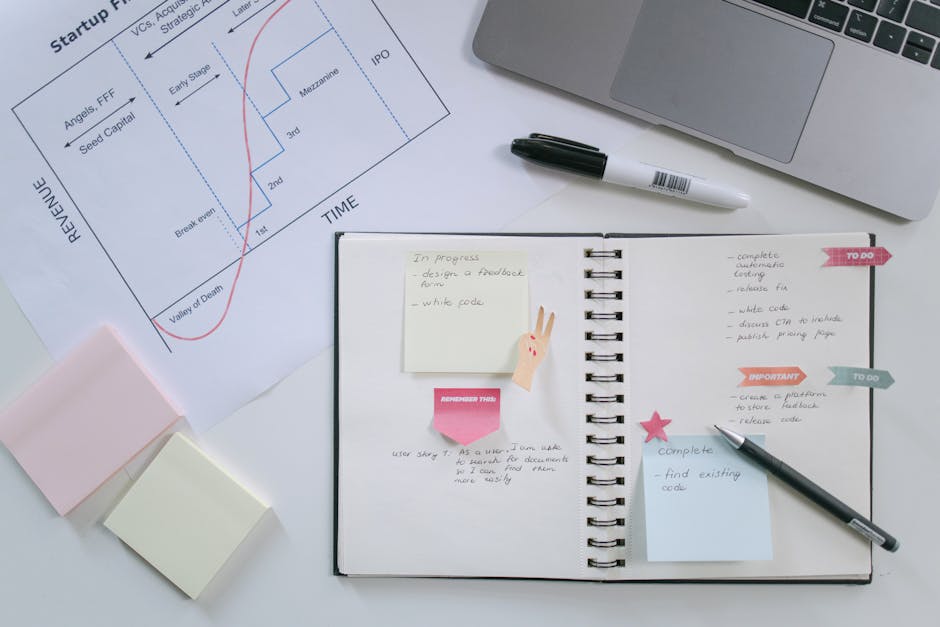
It was 2:14 AM on a Tuesday in mid-November when I realized I was officially losing my mind. I wasn’t even working on something important. I was reorganizing my ‘Reading List’ database in Notion, color-coding tags for books I knew I was never going to read, because I felt guilty that I hadn’t been ‘productive’ enough during my actual work hours. I had this physical tightness in my chest, like a debt collector was standing over me, but the debt was just… time. I felt like I owed the universe every waking second of my focus.
That’s the thing about toxic productivity. It’s not about being a hard worker. Hard work is fine. This is different. It’s the pathological need to make sure every minute of your existence has a measurable ROI. If you aren’t learning a language while you fold laundry, or listening to a ‘wealth-building’ podcast while you shower, you feel like you’re failing at life. It’s exhausting. It’s also a lie.
The part where I admit I was a total sucker
I used to be the person who bought into every single ‘optimization’ trend. I’ve tried the Pomodoro technique, time-blocking, the Getting Things Done method, and something called ‘Eat the Frog’ which sounds a lot more exciting than it actually is. I even spent $420 in 2022 just on various app subscriptions—Todoist, Obsidian, Sunsama, you name it. I thought if I just found the right system, I would finally feel ‘done.’
But you’re never done. That’s the trap. Productivity culture is like a sourdough starter that’s grown too large for the jar and is now eating your kitchen. The more you do, the more you realize there is to do. I spent three weeks in October tracking my caffeine intake against my closed Jira tickets. I found that 400mg of caffeine resulted in 12% more tickets completed, but a 30% increase in bugs and a 100% increase in me being a jerk to my coworkers in Slack.
Optimization is often just a fancy word for anxiety.
I genuinely think people who use productivity trackers for their hobbies—like tracking how many pages they read for ‘fun’—are bordering on sociopathic behavior.
I know people will disagree with that. They’ll say ‘Oh, it helps me stay motivated!’ No. It helps you gamify your relaxation so you don’t have to face the fact that you don’t know how to just *be* anymore. If you have to ‘optimize’ your relationship with your kids or your downtime using a Trello board, you’ve already lost the plot. Total lie.
Why your ‘Second Brain’ is actually a tumor
Everyone is obsessed with building a ‘Second Brain’ lately. They want to clip every article, save every tweet, and link every thought in a complex web of digital notes. I tried this for six months. I had 1,400 notes in Obsidian, all perfectly backlinked.
Do you know how many of those notes I actually went back and used to create something meaningful? Zero. Maybe three? Let’s say three to be generous.
What I mean is—actually, let me put it differently. We’ve turned the act of *preparing* to work into the work itself. We spend four hours setting up a workflow so we can save ten minutes on a task that takes twenty minutes. The math doesn’t add up. It’s a form of procrastination that feels like progress. I’ve come to absolutely loathe Notion specifically for this reason. It’s a glorified Lego set for adults who are too scared to actually start writing or coding. It’s slow, it’s clunky, and it encourages you to spend more time on the ‘system’ than the ‘output.’
Anyway, I’m getting off track. The point is that these tools often feed the toxicity. They give us a place to dump our anxiety about not doing enough, which just creates a bigger pile of things we feel guilty about not doing. I deleted almost all of them. I went back to a physical notebook and a pen. If a thought isn’t important enough for me to remember or write down by hand, it probably wasn’t that life-changing to begin with.
The 45-day experiment that actually sucked
Last year, I decided to track my ‘Output Score’ (an arbitrary 1-10 rating of how much I got done) against my ‘Existential Dread’ (how much I hated being alive that day). I did this for 45 days straight.
- On days where my Output Score was an 8 or higher, my Dread score averaged a 7.4.
- On days where I did almost nothing—maybe 2 hours of real work—my Dread score was a 3.
- The correlation between ‘doing a lot’ and ‘feeling like garbage’ was 0.82.
That was a wake-up call. I was literally working myself into a state of misery because I thought that was what ‘success’ looked like. I might be wrong about this, but I think most of us are just performing productivity for an invisible audience. We want to be the person who has it all figured out, the one who is ‘crushing it.’
But who are we crushing? Usually just ourselves. I’ve seen people at companies like Google or Meta who have the most optimized calendars you’ve ever seen, and they are some of the most miserable, hollowed-out people I’ve ever met. They have no hobbies that aren’t ‘side hustles.’ They have no stories that aren’t about ‘learnings.’ It’s pathetic.
How to actually stop the spiral
If you feel like you’re on the edge of permanent burnout, you don’t need a new app. You need to get comfortable with being mediocre. This is the part that a corporate editor would probably tell me to soften, but I won’t.
You are allowed to be a B-minus employee.
The world won’t end. Your company (which would replace your role in a heartbeat if you dropped dead) will continue to exist. I started doing this thing I call ‘The Minimum Viable Day.’ I figure out the two things that *actually* matter for my job, I do them, and then I just… stop. I don’t look for more work. I don’t ‘clear my inbox.’ I go for a walk. I stare at a wall. I play a video game that doesn’t have a leveling system.
I used to think multitasking was the devil, but I’ve changed my mind. I think multitasking is actually fine if the tasks are mindless enough. I’ll watch a mindless reality show while I do my expense reports. It makes the soul-sucking work tolerable. The scientists who say you lose 40% of your productivity by switching tasks are right, but they forget to mention that sometimes that 40% is the only thing keeping you from jumping out a window.
Here is my very short, zero-fluff recommendation for fixing this:
- Delete any app that makes you feel like you’re ‘falling behind’ on your own life.
- Stop reading productivity books. They are all just the same three ideas wrapped in 300 pages of filler.
- Set a hard ‘pencils down’ time. Mine is 5:30 PM. No exceptions.
- Find a hobby that is impossible to monetize.
I started pottery. I’m terrible at it. My bowls look like melted cow pies. There is no way to ‘optimize’ it and I will never make money from it. It’s the most productive thing I’ve done in years. Worth every penny.
I still struggle with it, though. Just last week, I caught myself looking at a ‘habit tracker’ app because I wanted to make sure I was ‘consistently’ doing my pottery. I had to literally throw my phone across the room. The urge to turn your life into a series of checkboxes is a hard one to kill. I don’t know if it ever fully goes away, or if we just get better at ignoring the voice that tells us we aren’t doing enough. I hope it’s the latter. Anyway, I’m going to go sit on my porch and do absolutely nothing for an hour. You should probably do the same.