
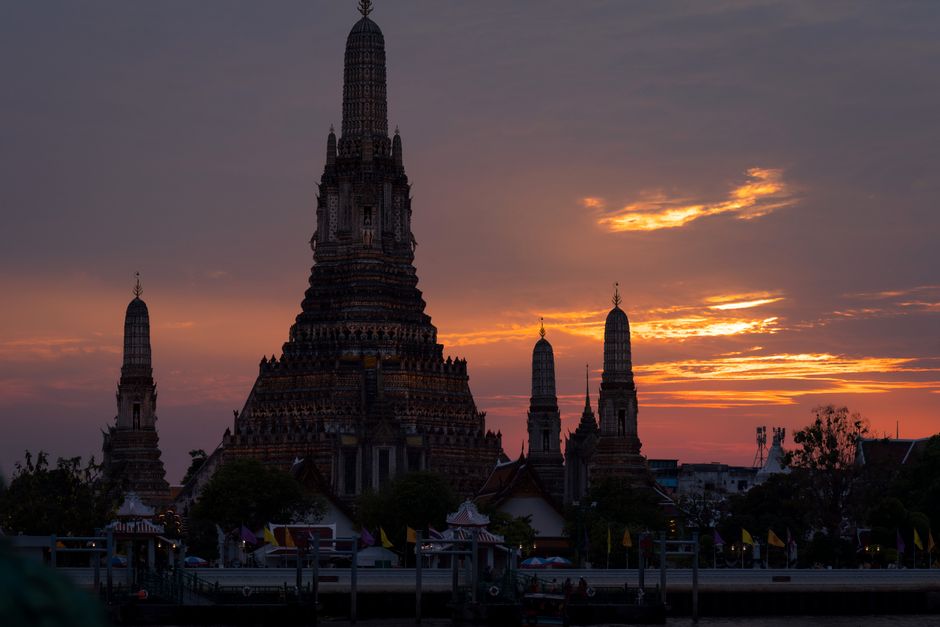
You booked a long-term stay in Bangkok. The Airbnb photos showed a desk. The reality is a wobbly glass table and a wooden chair that punishes your spine after 45 minutes. Now you need a co-working space—fast—and you don’t want to burn 8,000 baht on a place with spotty WiFi and broken air conditioning.
I’ve worked remotely from Bangkok across three separate stints totaling 14 months. I’ve signed up for spaces that looked great on Instagram and turned out to be glorified cafes with membership cards. I’ve also found a few gems. This guide is about separating those two categories.
The Three Questions That Eliminate 80% of Spaces Immediately
Most co-working space reviews are useless. They show you photos of the lobby, mention the free coffee, and call it a day. For long-term work, you need to dig into specifics that actually affect your daily output.
What’s the backup internet situation?
Every space in Bangkok claims “high-speed WiFi.” That phrase means nothing. What matters is whether they have dual ISPs with automatic failover. The best spaces run AIS fiber as primary and TrueMove as backup—two completely separate infrastructure providers. If both lines go through the same physical conduit into the building (common in older Sukhumvit sois), one construction crew can kill your connection for the day.
Ask the space manager directly: “If your primary ISP goes down, how many seconds until the backup kicks in?” If they hesitate or say they’ve “never had an issue,” walk away. Spaces that take this seriously can answer immediately. JustCo at AIA Sathorn Tower runs dual enterprise-grade connections with a documented failover time under 30 seconds. Hubba locations vary—some have proper redundancy, others don’t.
What’s the chair situation—specifically?
“Ergonomic chairs” is another empty phrase. You need to know the model. A Herman Miller Aeron (found at WeWork T-One and some JustCo locations) is a fundamentally different experience from a 3,000-baht knockoff that looks similar in photos. After week three of eight-hour days, the difference lives in your lower back.
Before committing to a monthly plan, do a day pass. Sit in the same chair model for at least four hours. If the space rotates chair models across different zones, confirm which zone your dedicated desk would be in.
What’s the actual monthly rate for a fixed desk?
Published rates are often negotiable for multi-month commitments, but you have to ask. Spaces in the Asoke/Phrom Phong corridor typically quote 5,000-9,000 baht monthly for a hot desk. Fixed desks run 8,000-15,000. If you’re staying three months or longer, ask for the quarterly rate. Many spaces knock 15-20% off without advertising it.
Also confirm whether the rate includes 24/7 access. Some spaces advertise “24/7” but it actually means “24/7 with advance notice and a key card deposit.” Others lock the doors at 9pm sharp.
Location Tradeoffs Nobody Mentions
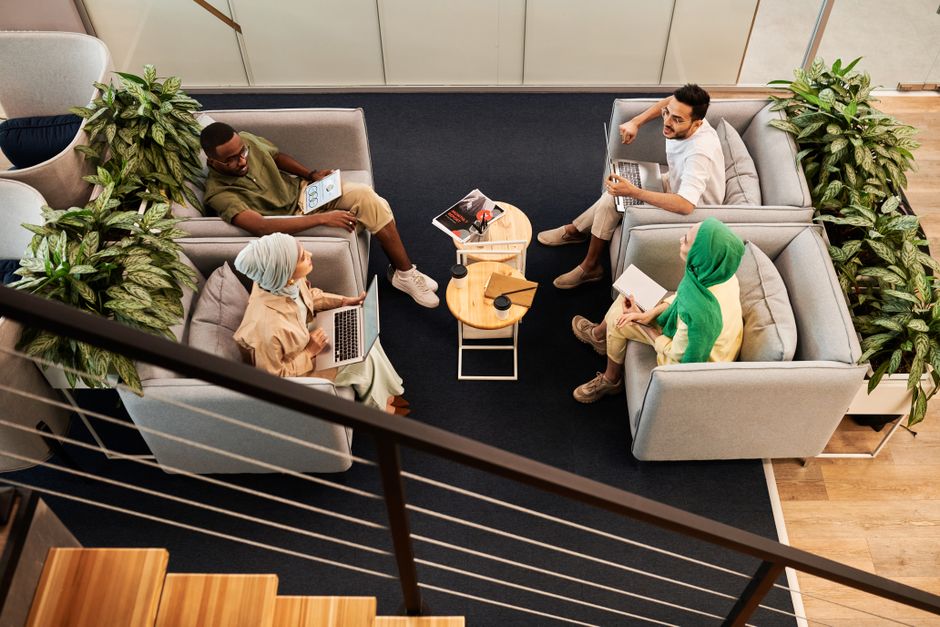
Bangkok traffic is not an abstract concept. A co-working space that’s 3 BTS stops away looks fine on a map. In February, that’s a 12-minute trip. In April, walking 400 meters from the station to the space in 38°C heat and 80% humidity means you arrive drenched in sweat. You will not do this every day. You’ll start working from your apartment and your productivity will crater.
Pick a space within 500 meters of a BTS or MRT station with a covered walkway. Not a “short motorbike taxi ride”—a walkable distance under shade. The stretch between Asoke BTS and Phrom Phong BTS along Sukhumvit Road has the highest concentration of viable spaces, but also the highest prices. Going one or two stops further out to On Nut or Ari cuts monthly rates by 30-40% while keeping commute times reasonable.
Here’s a quick reference for how location affects pricing:
| Area | Monthly Hot Desk Range | Monthly Fixed Desk Range | Walkability from Transit |
|---|---|---|---|
| Asoke/Phrom Phong | 6,000-9,000 THB | 10,000-15,000 THB | Excellent, mostly covered |
| Sathorn/Silom | 5,000-8,000 THB | 8,000-12,000 THB | Good, some uncovered stretches |
| Ari/Saphan Khwai | 3,500-6,000 THB | 6,000-9,000 THB | Good, shorter walks |
| On Nut/Bang Chak | 2,500-4,500 THB | 5,000-7,500 THB | Variable, check specific soi |
| Ekkamai/Thong Lo | 5,500-8,000 THB | 9,000-13,000 THB | Poor, long walks from BTS |
Ekkamai and Thong Lo look close to the action on a map. They’re not. The BTS stations sit far from most co-working spaces in those neighborhoods, and the sois lack consistent shade. Unless you find a space directly on Sukhumvit Road, skip these areas for daily commuting.
When a Co-working Space Is the Wrong Choice
Co-working spaces solve a specific set of problems: you need reliable internet, an ergonomic workspace, separation between home and work, and occasional meeting rooms. If you don’t need all four of those things, you’re probably overpaying.
If your apartment already has a proper desk and chair and your building’s internet is stable, a co-working membership adds 5,000-9,000 baht to your monthly expenses for no reason. Spend that money on a portable monitor instead. The Arzopa Z1FC (around 4,500 THB on Lazada) gives you a second screen that weighs under a kilogram.
If you only need a workspace two or three days a week, day passes beat monthly memberships. Most spaces charge 300-500 baht per day. At three days weekly, that’s roughly 3,600-6,000 baht monthly—comparable to or cheaper than a hot desk membership at the same space, with zero commitment.
If you take frequent calls throughout the day, a co-working space can become a nightmare. Phone booths fill up. You end up taking calls in stairwells or outside in the heat. In this case, a serviced office with a small private room (like those from Regus or Servcorp) might cost more but actually lets you work. Alternatively, a good pair of noise-canceling headphones—the Sony WH-1000XM5 handles Bangkok street noise remarkably well—plus a dedicated corner of your apartment might be the better setup.
A Quick Rundown of Spaces Worth Your Day Pass
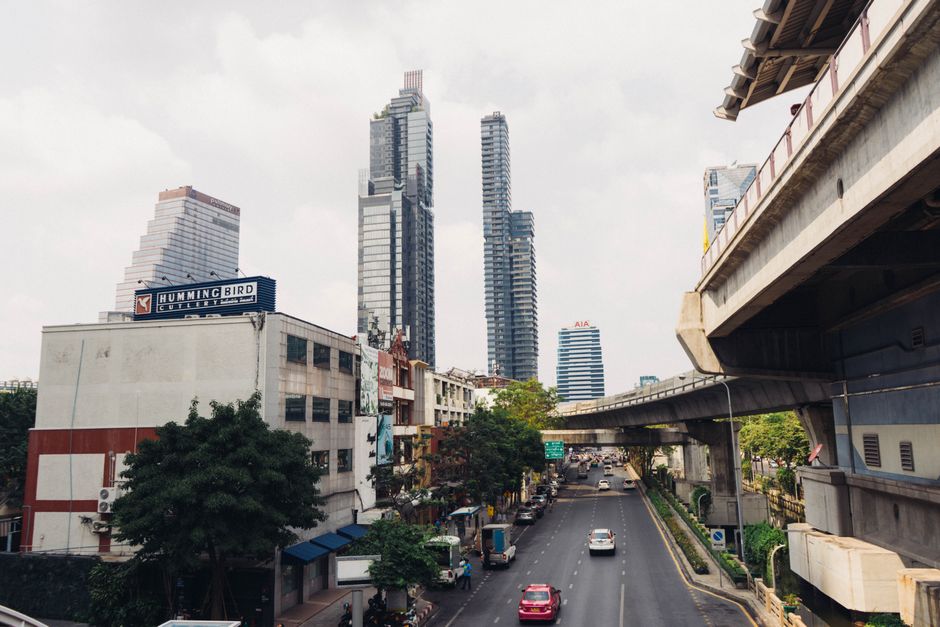
These aren’t rankings. They’re categorizations based on what each space actually delivers versus what it promises.
- The Hive Thong Lo: Beautiful space, genuinely good community if you’re in creative fields. Internet is solid but the walk from Thong Lo BTS is brutal in hot season. Best for people who already live in Thong Lo/Ekkamai and can walk without hitting Sukhumvit. Monthly hot desk around 5,900 THB.
- JustCo at AIA Sathorn: Corporate-grade everything. Dual ISP failover, Herman Miller chairs, proper soundproofed phone booths. Zero community vibe—this is where you go to work, not network. Monthly fixed desk roughly 12,000 THB. Worth it if output matters more than ambiance.
- Hubba (multiple locations): The original Bangkok co-working brand. Quality varies dramatically by branch. The Siam Discovery location is well-maintained. Some franchise locations are not. Always do a day pass before committing to a Hubba monthly plan. Rates start around 3,900 THB for hot desk.
- WeWork T-One: Predictable. You know exactly what you’re getting. Good chairs, reliable internet, proper meeting rooms. More expensive than local alternatives (around 9,000 THB monthly for hot desk) but zero surprises. If you’re on a tight deadline and can’t afford to troubleshoot a workspace, this is the safe pick.
- Glowfish Sathorn: Smaller, quieter, fewer amenities than the big names. But the monthly fixed desk rate hovers around 6,500 THB and the internet has never failed me across two separate month-long stints. Bring your own coffee setup.
How to Test a Space Before You Commit
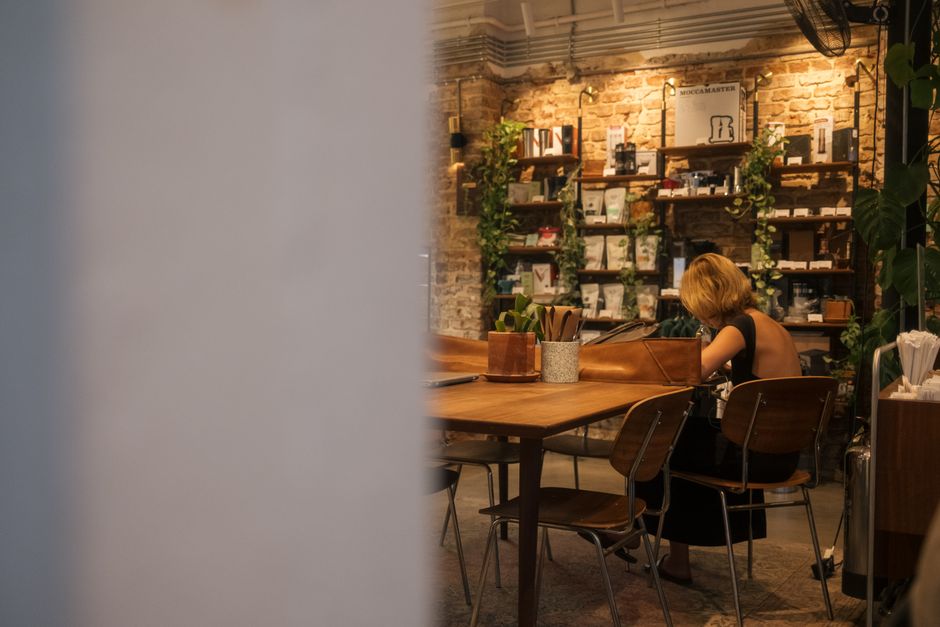
Never sign a monthly contract without spending at least one full workday in the space. Not a tour. Not a two-hour trial. An actual eight-hour workday.
Arrive at 9am and stay until at least 5pm. During that day, check these specific things:
AC performance at 2pm. Bangkok afternoons test every cooling system. If the space feels warm at 2pm when it’s 36°C outside, it’ll feel warm every afternoon from March through June. Some spaces cut AC output during off-peak hours to save on electricity. You’ll notice.
Phone booth availability at 3pm. This is peak call time for people working with European companies (morning in London/Berlin). If all booths are occupied when you need one, that’s your daily reality.
Actual internet speeds during lunch hour. Run a speed test at 12:30pm when everyone is streaming video during their break. The 200 Mbps they advertised at 10am might drop to 15 Mbps when the space is full. Ookla Speedtest takes 30 seconds. Do it.
Outlet availability at your preferred desk type. Some spaces have beautiful window desks with exactly one outlet shared between four seats. You’ll spend your day guarding a power strip. Check before you commit to a specific zone or desk.
Noise levels when the space is full. A space that’s library-quiet during your Tuesday tour might be a call center on Wednesdays when a particular company’s team all works on-site. Ask the manager which days are busiest and test on that day.
Bangkok has more co-working spaces than it needs right now. That means you have leverage. Spaces that won’t let you do a paid day pass before committing to a monthly plan are hiding something. Move on to the next one—there are at least five more within two BTS stops.