
In October 2021, I sat in a glass-walled conference room in downtown Chicago and watched the best engineer I’ve ever worked with quit. Her name was Sarah. She didn’t leave for more money—in fact, she took a nearly 15% pay cut to go to a smaller firm. She left because I couldn’t waive a mandatory “Tuesday/Thursday” office rule that our HR department had cooked up to justify the lease on a building nobody wanted to be in. I felt like a total fraud sitting there, trying to explain the ‘synergy’ of being in the room together while she looked at me like I was reciting a cult manual. She knew, and I knew, that her Tuesday commute was two hours of her life she’d never get back, just to sit in a cubicle and wear noise-canceling headphones.
We’re still making these mistakes. Leaders are obsessed with “getting back to normal” because normal was comfortable for them, but for the people actually doing the work, normal was a grind that no longer makes sense. If you’re wondering why your LinkedIn feed is full of your top performers announcing “exciting new chapters” elsewhere, it’s probably one of these seven things.
The ‘Anchor Day’ fallacy is killing autonomy
Most companies picked Tuesday, Wednesday, and Thursday as their mandatory days. It feels logical, right? Everyone is in at the same time. But what actually happens is that Tuesday morning becomes a frantic rush of people trying to remember where they parked their badges, followed by eight hours of back-to-back Zoom calls that they could have done from their kitchen table. What I mean is—actually, let me put it differently. By forcing specific days, you aren’t creating collaboration; you’re creating a bottleneck. You’ve taken the one thing high-performers value—control over their environment—and flushed it.
I used to think anchor days were the only way to keep a team cohesive. I was completely wrong. Now I see them for what they are: a lack of trust disguised as a scheduling preference. If the only way your team talks is because they bumped into each other at the Nespresso machine, your communication stack is broken. It’s just theater.
High-performers don’t want ‘flexibility’ as a perk; they want autonomy as a baseline.
The ‘Presence’ obsession and the green dot
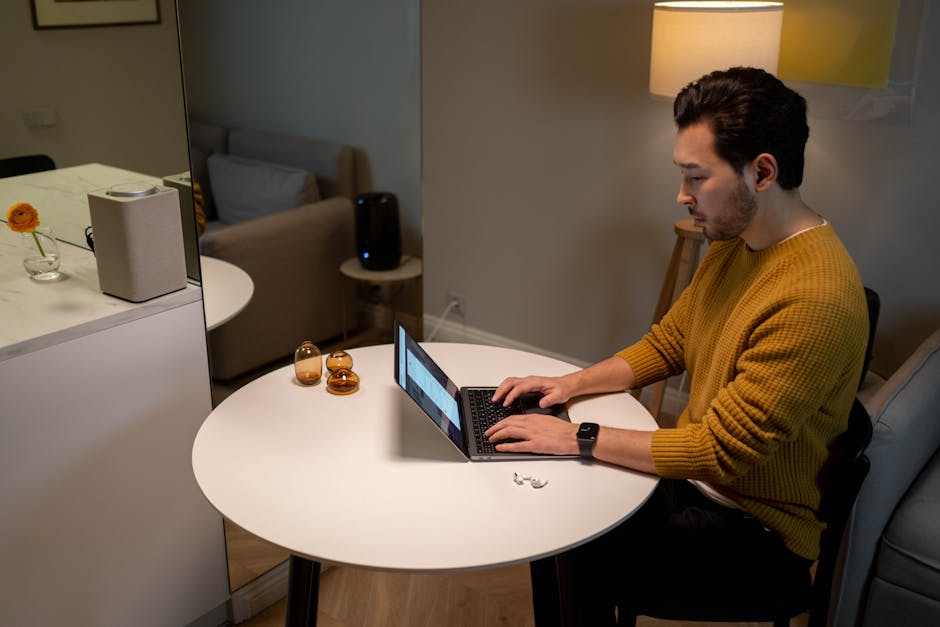
I tracked my own focus time for 14 weeks last year. I’m a bit of a nerd about this (I kept a spreadsheet, which is probably a sign I need a hobby). On days I worked from home, I averaged 212 minutes of deep, uninterrupted work. On office days? 84 minutes. The rest of the time was eaten by ‘quick chats,’ loud sales calls three desks over, and the general friction of existing in a physical space with 50 other people.
Yet, so many managers still manage by ‘line of sight.’ They look for the green dot on Slack or the physical body in the chair. It’s lazy management. I know people will disagree, and they’ll say that ‘spontaneous innovation’ only happens in person, but I’ve yet to see a single piece of data that proves a hallway conversation is more valuable than two extra hours of deep work. I honestly think most managers want people back in the office because they don’t know how to measure output without seeing a person looking busy. It’s a security blanket for the incompetent.
The equipment gap is a slap in the face
This is a small point, but it drives me insane. I’ve seen companies worth billions give their employees a $2,500 MacBook and then expect them to work on a $150 wobbly desk at home with a crappy 24-inch monitor they found in a closet. Then, when the employee comes into the office, they have to use those awful Dell WD19 docking stations that never work on the first try and Jabra headsets that pinch your ears after twenty minutes. I refuse to use Jabra equipment. I don’t care how many awards they win; they are instruments of torture designed by people who hate ears.
If your hybrid policy doesn’t include a serious stipend for a home setup that matches or exceeds the office, you’re telling your staff that their comfort at home isn’t your problem. But it is your problem, because that’s where they’re doing 60% of their work. Total waste of potential.
Commuting to a Zoom call
There is nothing—and I mean nothing—more soul-crushing than driving 45 minutes in traffic, paying $20 for parking, and then sitting in a ‘huddle room’ by yourself because half the team is remote that day. I’ve done this. I remember sitting in a glass box at our Seattle office, staring at a screen, while my teammate sat in her living room three miles away. We were both on the same call. We didn’t even see each other in the breakroom. Anyway, the point is that if your policy doesn’t guarantee that ‘office time’ is actually ‘together time,’ people will feel like they’re being taxed for the privilege of working.
If they’re going to be on video all day, let them do it from home.
The ‘Culture’ lie
Culture isn’t free pizza. It’s not a ping-pong table or a beer fridge that nobody touches because they want to beat the traffic home. I might be wrong about this, but I think the ‘office culture’ argument is usually a mask for ‘I miss the way things used to be.’ Real culture is how you handle a crisis when everyone is in different time zones. It’s how you document decisions so the person in London doesn’t feel left out of the conversation in New York.
I once worked at a place that insisted on ‘In-Person Fridays’ for ‘team bonding.’ We spent the whole day awkward and resentful because we were all behind on our actual work. The ‘culture’ we built was a shared hatred of Fridays. That’s not a win. I actually tell my friends to avoid any company that mentions ‘office energy’ in the job description. It’s usually code for ‘we have no processes and rely on shouting across the room to get things done.’
The ‘Camera-On’ Mandate
I’m going to say something that might get me in trouble with my own boss, but I genuinely believe that anyone who insists on ‘cameras on’ for every single meeting is a bit of a narcissist. Or at least, they’re deeply insecure. We’ve spent three years learning that we can communicate perfectly well via audio and screen sharing. Forcing someone to perform ‘attentiveness’ for six hours a day is exhausting. It’s called Zoom fatigue for a reason.
What I mean is—actually, let me put it differently. If you don’t trust your employees to listen without seeing their faces, you shouldn’t have hired them. I’ve had my best breakthroughs on calls where I was pacing around my room with my camera off, just listening and thinking. Being tethered to a 2-inch square of my own face is a distraction. They’re lying to you if they say it helps them focus.
The ‘Back to Normal’ delusion
The biggest mistake is thinking that hybrid is a temporary bridge back to 2019. It’s not. The world changed. The leverage shifted. Your top talent—the ones who actually move the needle—know they can get a job anywhere. They aren’t tied to your local zip code anymore. If your policy feels like a set of rules instead of a framework for success, they’ll find someone who treats them like adults.
I think about Sarah a lot. She’s at a fully remote company now. She’s happier, she’s more productive, and she’s probably making more money by now anyway. We lost her because we were obsessed with ‘the way we’ve always done it.’ I don’t know how we’re supposed to mentor the next generation of juniors in this environment—that’s the one part I’m genuinely stuck on—but I know that forcing people back into a 20th-century box isn’t the answer.
Stop managing by attendance. Start managing by outcomes. That’s the whole trick.