

I was sitting in a Blue Bottle Coffee in San Francisco back in October 2021, feeling like a god of productivity. I had my iPad Pro on a stand, my mechanical keyboard clicking away, and a Notion dashboard that looked like the control room of a spaceship. I’d spent three days—and about $150 on a ‘Life OS’ template—setting up relational databases for everything from my morning coffee intake to my 10-year career goals. I felt organized. I felt ready. I felt like a genius.
The problem was that I hadn’t actually written a single blog post in three months. Not one. I was too busy moving ‘tasks’ from one database to another and color-coding my ‘Resource’ tags. I was optimizing a void.
High-tech systems are a trap. They promise clarity but deliver a specific kind of digital paralysis that we mistake for work. What I mean is—actually, let me put it differently: we use these tools to hide from the messiness of having a real idea. Notion, Obsidian, Roam—they’re all just fancy ways to procrastinate in public. I’m not saying they’re useless for everyone, but for anyone trying to actually create something new, they are often a death sentence for the creative spark.
The part where I admit I was wrong
I used to think Notion was the only way to stay sane. I was completely wrong. I used to tell my friends that if they weren’t using a ‘Second Brain’ system, they were basically throwing their intelligence in the trash. I was that guy. I’m sorry.
The shift happened when I looked at my output data. I’m a bit of a nerd for tracking, so I looked at my 2022 logs. I spent exactly 142 hours building and ‘maintaining’ systems in Notion and Obsidian. During that same period, I only spent 19 hours actually writing. That’s a disgusting ratio. It’s like spending ten hours sharpening a pencil and only thirty seconds drawing. It’s a joke.
I know people will disagree with this, and some ‘Productivity YouTubers’ will tell you that you just haven’t found the right workflow yet. They’re lying. They make money by selling you the dream of the workflow, not by helping you finish your project. The workflow is the distraction.
Digital systems are too sterile
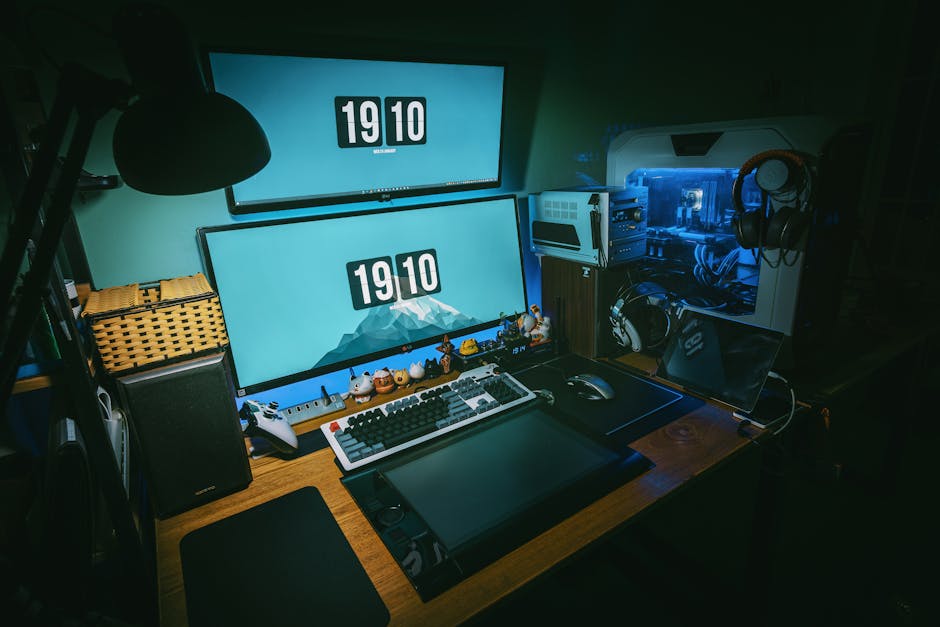
There is something about a digital interface that demands perfection. When you open a new page in Notion, it’s a blinding white rectangle. You feel like you have to have a ‘Heading 1’ and a ‘Property’ and a ‘Cover Image.’ It feels like trying to write a poem in a sterile hospital room. There’s no room for the dirt that creativity requires.
Physical journaling is different because it’s ugly. My current notebook is a cheap Muji A5 that cost me about five bucks. It has coffee stains on page 12. I’ve crossed out entire paragraphs with a thick black pen. It looks like a mess, but that’s the point. Creativity is a messy kitchen, not a showroom. When I’m writing on paper, I don’t care if the font looks good. I don’t care about ‘backlinking’ to a previous thought. I just think. Paper doesn’t have a ‘Search’ function, so you’re forced to remember what actually matters.
I might be wrong about this, but I think the lack of an ‘Undo’ button is the most important feature of a physical journal. In Notion, I can delete a thought before I’ve even finished typing it. On paper, that bad idea stays there. Sometimes, three days later, I realize that ‘bad’ idea was actually the seed of something great. Digital systems encourage us to sanitize our brains too early.
A brief tangent on ink
I recently spent forty dollars on a bottle of Iroshizuku ‘Kon-peki’ ink because the name sounded cool and I liked the bottle. It’s a deep cerulean blue. I don’t even use a fountain pen that often, but there’s something about the way that specific blue hits the off-white paper that makes me want to keep writing. It’s a tactile experience that a screen can never replicate. Anyway, back to the point.
Why I actively dislike Obsidian
I’m going to say something that will probably get me some hate mail: I think Obsidian is for nerds who don’t actually want to work. I tried it for three weeks and it felt like I was trying to build a nuclear reactor just to remember to buy milk. The whole ‘graph view’ where all your notes are connected by little lines? It looks cool in a screenshot for Twitter, but it’s functionally useless for producing work. It’s digital hoarding disguised as ‘knowledge management.’
I refuse to recommend Obsidian to anyone who asks. It’s too much friction. I’ve seen friends lose entire months to ‘configuring’ their plugins. It’s a trap. Total waste of time.
The more time you spend organizing your thoughts, the less time you spend having them.
I genuinely believe Tiago Forte’s ‘Building a Second Brain’ has done more to stall creative careers than any other book in the last decade. It’s not his fault, really—he’s just selling a solution to a problem we all feel. But the solution isn’t more software. The solution is usually just a pen and a quiet room. We don’t need a second brain; we need to start using the first one more effectively.
The $5 solution
Here is my ‘high-tech’ system now. It’s very complicated, so try to keep up:
- One cheap notebook (Muji or Leuchtturm1917, doesn’t matter).
- One pen that doesn’t skip.
- No phone in the room.
- Write until the page is full.
That’s it. That’s the whole trick. Since I switched back to this ‘primitive’ method, my writing output has tripled. I’m not exaggerating. I went from struggling to finish one article a month to finishing one or two a week. The friction of paper is actually a lubricant for the mind. It slows you down just enough to let the thoughts catch up to your hands.
I still use Notion for one thing: a simple list of deadlines. That’s it. No databases, no relations, no ‘Life OS.’ Just a list. Anything more than that and I start feeling the itch to ‘optimize’ again, and I know that itch is just my lizard brain trying to avoid the hard work of thinking.
I still find myself looking at new ‘productivity’ apps every now and then. The marketing is so good. They promise that *this* one will finally be the one that makes me organized. But then I look at my messy Muji notebook and the blue ink and the crossed-out sentences, and I realize I already have everything I need. I wonder how many great books haven’t been written because the author was too busy setting up their ‘Zettelkasten’ in a new app. It’s a sad thought. Does anyone actually feel more creative after a day of ‘knowledge management’?
Stop clicking. Start writing.